Lanterne Rouge by Max Leonard – Book Review

Finishing last in professional sport is not usually a cause for celebration. The aim is to win, to conquer, to vanquish. To the victor the spoils and all that. It’s a pretty Darwinian landscape out there. Thrive and survive or falter and fade. But even in Nature occasionally something unusual happens. The weakling persists; the unsuited somehow clings on, the underdog has his day.

Grand Tour cycling is unusual too. Unusually long, unusually hard, unusually constructed. Just finishing the gruelling three-week stage race is entry to an exclusive club; one that automatically carries the mark of a survivor. Seen through some eyes there are no losers at all. “I’m not last.” insisted Iker Flores when he was in just that position at the 2005 Tour de France, “Make no mistake. 200 came here. I am 120th. In another race I might be last. But not here.”
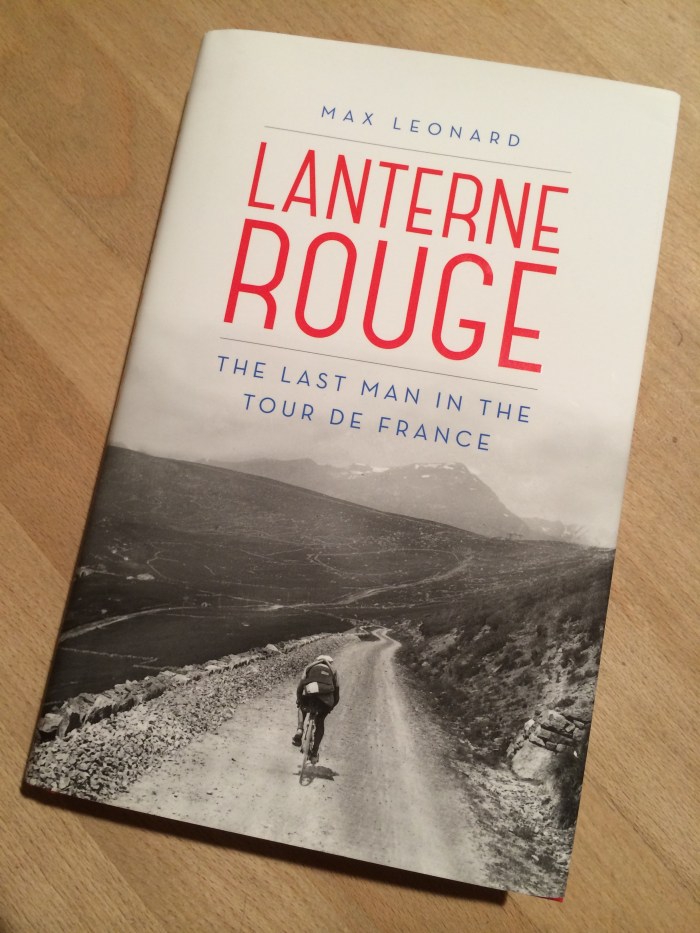
Photo_22092014_21_33_15.jpg

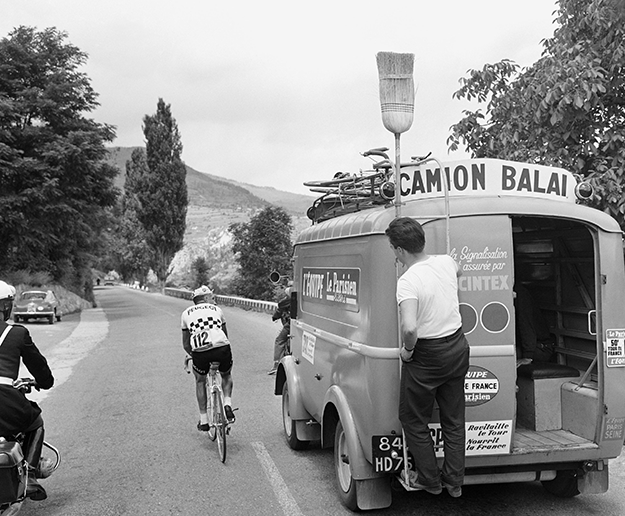
The Tour de France in particular has a long rich history of celebrating the man who arrives in Paris last. Founder Henry Desgrange’s publicly-stated aim that “The ideal Tour would be one in which only one rider survives the ordeal” makes every finisher a winner in some sense and Max Leonard’s engaging book Lanterne Rouge – The Last Man in the Tour de France (Yellow Jersey Press. RRP £16.99 Hardcover, £6.99 Kindle) on the history and mindsets of these “Lanterne Rouges” is just that; a celebration. He examines the reasons behind the longevity of and affection for this most historical of ‘wooden spoons’, talks with numerous Lanternes to see how they view their ‘achievement’, and ponders what place such an accolade has in their (and our) lives.

For some the reasoning is quite plain. In past decades the ‘fame’ that accompanied being last-placed in the Tour made it a much more lucrative option than finishing tenth from last – or even tenth overall – and so, for some, it became a goal in its own right. Being Lanterne Rouge (named after the red light that was traditionally hing form the last train carriage to help station masters know that none had become unhooked) guaranteed exposure for the rider’s sponsors and invites to the all-important post Tour exhibition criteriums for the rider himself. For some the goal of finishing last became a positive aim rather than just the consolation prize it began its life as, and throughout the book Leonard recounts tales of riders using all their racing guile, experience and tactical inventiveness in order to make the fine judgement between losing bundles of time and finishing within the time-cut. 

In looking for the essence of the Lanterne Leonard inevitably unearths a few of the characters of the sport. The Lanterne who battled through through early sickness and then managed a stage win over the great Eddy Merckx later in the same race; the exotic North-African who reckoned he was poisoned and then expertly spun his own PR in order to stay in the headlines; the brothers were both Lanterne Rouge during the reign of Lance Armstrong. With chapters covering almost every decade since the race’s inception in 1903, the book also acts as an historical mirror to the privations of those who undertook La Grande Boucle. The tale of Jules Nempon – the sole surviving ‘unsupported’ rider of 1919 – is particularly illuminating. He tracks some of the surviving Lanternes down – men like triple Lanterne Wim Vansevenant, epic baradour Sandy Casar and the man who probably fought ‘hardest’ of all to be Lanterne Rouge, Gerhard Schönbacher but others escape him – most notably Philippe Gaumont – but again, this just adds to the story as it is understandable that some might not cherish their award as dearly as others. 
Leonard’s own battles on the bike also feature in the book. His writing style is both engaging and engaged. His journey along the road of discovery is a much a part of the book as the reminisces of the pro riders who suffered so mightily to finish dead-last. His trials and tribulations interviewing the Lanternes is his own Grand Tour with good days and bad days. I heard Max talk about the book at the Rapha Tempest Festival back in July and found his enthusiasm for the subject quite captivating. As we saw in Yorkshire, the Tour is a huge beast these days with the gaze often relentlessly focussed on the winning and the winners but these little sideways looks at the sport – like Charly Wegelius’ excellent ‘Domestique‘ – offer a new persepctive and understanding to the races that we often feel that we know so well.

Today’s Lanterne Rouges – more comfortably paid and looked after than their predecessors – do not need the limelight in same the way that their earlier counterparts did and enjoy relative anonymity these days. This summer Giant Shimano’s Ji Cheng was the most recent to join the roll-call of Lanternes. Quite fittingly, he will not be the last.
Lanterne Rouge – The Last Man in the Tour de France

The Mavericks – Jens Voigt – Never Say Die

There aren’t many pro-riders out there with a catchphrase. There are nicknames aplenty and a select few coureurs have a trademark winning celebration. There are also those whose on-the-record words have come back to haunt them in later years but if you are looking for a rider who can be totally summed up by something he once said, look no further than the man who has just retired after 16 years of no-holds-barred, never say die racing, whose inward rallying call became outward shorthand for his whole outlook on life. For most cycling fans you don’t need to say Jens Voigt. Like him you just say, “Shut Up Legs”.

Continue reading

Yorkshire’s Grand Depart – Rapha Tempest Festival

It’s the night before the Grand Départ and things are not looking too rosy in ‘God’s Own Country’. To use the local phrase, it is ‘siling down’ and the floodlights outside the Rapha HQ tent at Broughton Hall in Yorkshire are in danger of being extinguished by a deluge of fierce intensity.  The rain is beating heavily on the plasticised canvas marquee, providing additional percussion to the Friday night beats being played by Rapha DJ’s Joey Hall and Festus. The throng of people inside are having a good time enjoying the tunes, the beer and the company but eyes keep flicking outside and you can feel minds wondering whether the name of the Tempest Festival will prove prophetic. I’m inside too, chatting to a couple of guys sitting at one of the long tables in the bar end of the tent. One notices my concern and leans in conspiratorially. “Don’t worry.” he says over the noise of the music. “I work as a trader in Amsterdam. I have to study the weather to make my bets. The sun will come out at eight o’clock tomorrow morning. I promise you.”

Continue reading

Tour de France – Final Roundup

When we look back at the 2014 Tour de France and debate the outcome a couple of things should be kept well to the front of the mind: Astana’s Vincenzo Nibali extended his lead over his rivals on every single significant stage. On the cobbles, in the Vosges on Bastille Day, in the Alps & Pyrenees and in the time trial. That fact alone should mark him out as a champion of some distinction. His win also completes his set of all three Grand Tours and allows him to join a select group of some of the greatest names in cycling. He won more road stages than any champion since Eddy Merckx, elevating the achievement further. The side-note that he did it in his national champions jersey will have pleased his home fans and cycling history aficionados in equal measure. He focused his season entirely on these two weeks and utterly dominated the race – appearing serene even when coolly dispatching the podium pretenders with stage winning attacks. The words ‘worthy champion’ should not even be being debated.

Continue reading

Tour de France – Rest Day Roundup 2

When I was a kid watching the Tour de France in the late Eighties, my rider allegiances often switched with whichever was my favourite jersey design. I would find myself supporting Renault one year, PDM the next, Z-Peugeot the year after that. As with football a few years earlier (and in the very same way as my young children today) I was something of a itinerant fan. I would pick a jersey, a haircut or a battle between two big stars and plump for one of them. The following year I could very well pick the other guy and have him as my favourite. This certainly happened in 1990 when my support switched from Laurent Fignon the year before to Lemond. Even though my football allegiance had very quickly solidified into one team over the others (mainly due to the fact I that I outgrew the Tottenham shirt – and the associated desire to be Steve Archibald – that I had been given and which caused much confusion in my Manchester-leaning mind) cycling remained ever thus. Unbiased. Unencumbered. Un-tribalised.

Continue reading

In Memoriam – Fabio Casartelli

Francisco Fabio Casatelli – b. 16.08.1970 – d. 18.07.1995

Died – Stage 15 1995 Tour de France

CASARTELLI

Casartelli’s death on the Col de Portet d’Aspet in 1995 was a defining moment for the question of rider safety within the professional sport. The Olympic road-race champion from 1992, who was riding for the Motorola team, fell descending at speed and hit one of the large concrete blocks that line the edge of the road . Shockingly graphic pictures of the blood from his fatal head injury was seen (and recently re-used in the film documentary Lance Armstrong “The Armstrong Lie”) prompting a rethink about the use of helmets. Motorola’s crossing of the finish line of the neutralised stage the following day and Armstrong’s emotional dedication of his victory at Limoges 3 days after the crash have etched the moment into the wider fabric of the race and the beautiful monument on the Portet d’Aspet is regularly stopped at by riders and officials during races nowadays.

In Memoriam – Tom Simpson

Tom Simpson – Born Nottinghamshire 30.11.1937

Died – Mont Ventoux. Stage 13 Tour de France – 13.07.1967

Tom Simpson

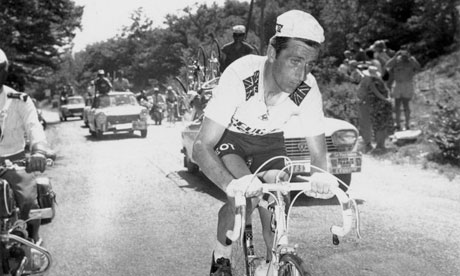
Tom Simpson’s death hangs over the Tour de France and British cycling with equally heavy significance. His life and his passing on the baking slopes of Mont Ventoux sums up all that is good and bad about cycling and also highlights the ambiguity that often exists between the two. The sublime talent, the willingness to suffer, the commercial pressures that led riders to go too deep too often and, of course, the drugs that were found in his rear pocket. I recently had the chance to hold the very maillot jaune that Simpson wore on his single stage in yellow in 1962 and it got the hairs prickling on the back of my neck. The esteem in which he is still held is immeasurable. His death, captured on grainy black & white film, is one of the few where the build-up to the collapse is recorded and, riding alone that day up the Bald Mountain to his destiny, his is an especially affecting passing.

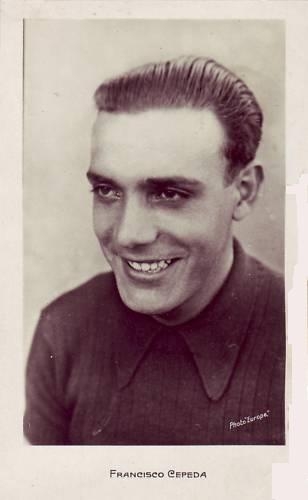
In Memoriam – Francisco Cepeda

Francisco Cepeda

Died – Stage 8 Tour de France – 12.07.1935

Francisco Cepeda

The first rider to die whilst racing a Tour stage, Cepeda crashed descending the Col du Galibier on Stage 8 from Grenoble to Gap, plunging off a ravine and fracturing his skull.. Reports vary as to whether he died on the way to hospital or a couple of days later.  

Stoller’s Départ – Douglas Cowie & Matthew Shaw

I am lucky to be old enough, and to have arrived in London just in time, to have enjoyed the considerable pleasures of the old Reading Room at the British Museum. The circular space at the centre of the Great Court, which attained almost sacred status to the Capital’s writers of yesteryear, was just about the most evocative place one could imagine to read or write. The Victorian desks, low glowing lights, the curved bookshelves lining the perimeter walls and the elegant clerestory windows were all suitably impressive but so was the archaic ticketed entry system which made you feel as much a part of the ancient furniture as the often impenetrable tomes in the room. Pushing open the low gate and entering the hushed arena of that literary sanctum was about as good as it got for me back then and I mourned the closing of the old Reading Room in 1997 like the loss of an old friend. It remains my favourite London space, despite not being open for 17 years.

Continue reading

Portrait of ‘The Cycling Podcast’ – with Richard Moore, Lionel Birnie & Daniel Friebe

It’s just after 3pm on a Tuesday afternoon in Hackney and Richard Moore, Lionel Birnie and Daniel Friebe are looking for a bit of peace and quiet. The trouble is that around the busy East London streets of Broadway Market and London Fields school kids are heaving out onto the hot pavements and the nearby building sites that are sprouting up yet more flats in this trendy part of the capital are still in full swing. Add in the chatter of the many achingly cool characters lounging outside myriad cafés and coffee shops and, despite the lovely summer afternoon weather, things are looking, and most definitely sounding, pretty bleak.

Continue reading