The Cycling Anthology Volume 5 – Book Review

It is a strange feeling to realise that I have not reviewed a Cycling Anthology before. They have popped up on the blog in the past on Christmas wish lists and the launch of Volume 4 featured, tangentially at least, in my Portrait of The Cycling Podcast feature but I must admit that I was somewhat chastened to find I’ve not previously written specifically about these excellent collections of original writing. As the series now reaches Volume 5 the time has come to rectify such a glaring oversight.

Photo 29-10-2014 13 44 27

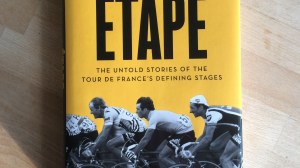
The premise of the Anthologies remains simple: get the very best cycling journalist’s around and give them free rein to write, at length, on a subject of their own choosing, and share the sales income equally. It’s an appealingly noble formula that has served editors Ellis Bacon and Lionel Birnie well over the editions and Volume 5 – the second to be published by Yellow Jersey Press (RRP £8.99, paperback) – is no exception. The range and quality of the writing is as high as ever and this edition can be seen as a particularly strong one.

In the latest offering, alongside Bacon and Birnie who both offer excellent chapters, are such notable cycling stalwarts as Brendan Gallagher, Jeremy Whittle, Francois Thomazeau, Edward Pickering, Andy McGrath, Matt Beaudin, Daniel Friebe, and Matt McGeehan. The ten chapters range widely; going back as much as a century historically and as far as Colombia geographically. We find treatises on that most elusive of cycling qualities: panache, alongside a revealing look at the Tour de France’s least well known director, Jean-Francois Naquet-Radiguet.. Who? Well, exactly. We have a report from the 2014 Track World Champs in Cali, Columbia and an elegy to the forgotten Pyrenean summit finish in Superbagneres. All are good reads in their own right but collected together in short chapter form they give us a fantastic tasting-plate of words that the authors have really invested their hearts and souls into.

The stand-out chapters for me this time around are equally varied. The volume rightfully opens with Brendan Gallagher’s “Soldiers of the Road”, covering his thoughts on the centenary of the start of World War I, as seen through the veil of the cyclists who fought (and often perished) in the conflict. As well as discussing the three Tour winners who died, Lapize, Faber and Petit-Breton, Gallagher also contextualises the War in terms of the bicycle itself. A key military ‘vehicle’ at the time, it is estimated that over 100,000 British soldiers served ‘a la velo‘ during the Great War. The number for the French and Belgians is significantly higher. The sheer scale of the conflict is always bewildering but, as usual, it’s the human touch that hits home hardest. Gallagher’s poignant revelations about reconnaissance cyclist John Henry Parr, the very first British soldier to be killed in the fighting, bring the madness and confusion of war home in the most personal way. His loss serves as a marker for all those who followed.

Loss of a different kind is covered excellently by Andy McGrath in his chapter “The Search For Joey McLoughlin”. McLoughlin was a promising Liverpudlian rider in the  late 1980’s, the winner of the 1986 Milk Race, who, like many before, headed to the Continent to fulfil his pro-cycling dreams. A contract with the Z-Peugeot team in 1988 that should have been the start of something great was really the beginning of the end. He returned to England and retired a year later, aged just 26. A few years later he disappeared completely, nit just from his cycling friends and work associates but also from his family and relations as well. McGrath starts the process of tracking him down but it will take more time and a longer story to solve this particular mystery.

Elsewhere, Matthew Beaudin’s “The Sounds of Cycling”, an aural analysis of the 2014 Tour de France, is a structural tour de force – a brilliant conceived and executed diary of a month away from home, as told through the audible assault that defines the chaos of the Tour. It’s quite wonderful. Similarly bold is Ellis Bacon’s retelling of the same Tour in rhyming verse. I must admit that I approached this chapter with significant apprehension but Bacon manages the seemingly impossible and actually leaves you wanting more. Chapeau indeed sir..

The four preceding volumes are also still available and have become a valued repository of cycling fact and cycling whimsy in my house. Even at the distance of such an overdue review, I would heartily recommend them all..

The Cycling Anthology Volume 5 will be released on 6th November.
Parkour Ride – Road vs Fixed vs BMX vs Mountain Bike.

It’s the banging on the safety barriers that tells us they are coming. A wave of frenetic beating rising up from below, masking the announcer’s urgent voice and even threatening the pumping music which is bouncing around the concrete walls of the multi-storey carpark. Overhead a police helicopter clatters, searching for something off near The River whilst just to the North the clustered towers of The City glare provocatively in the fading dusk light, finally hiding the last of the unseasonal October sun which followed the earlier autumnal rain. The announcer’s muffled exhortations become ever more drowned out by the banging as the riders approach the roof but then, as they burst out of the dark cavern-like mouth onto level 10, the crescendo dissipates as it released from the pressured confines of below and the experience becomes visual. Continue reading

Swimming Against The Tide  – Tsubasa Frameworks.

logo BW

D.o.i.n.g.

t.h.i.n.g.s

s.l.o.w.l.y.

a.n.d.

c.a.r.e.f.u.l.l.y.

has fallen out of fashion somewhat. We all see this in our everyday lives and, for the most part, we all go along with it; swept up by the ever quickening current that comes with each new turn of the tide. But we also see that some people choose to reject this acceleration of life and try to apply the brakes in some way. They choose to either fight the current or, occasionally, get out of the water altogether.

Continue reading

Goggles & Dust by Brett and Shelley Horton – Book Review

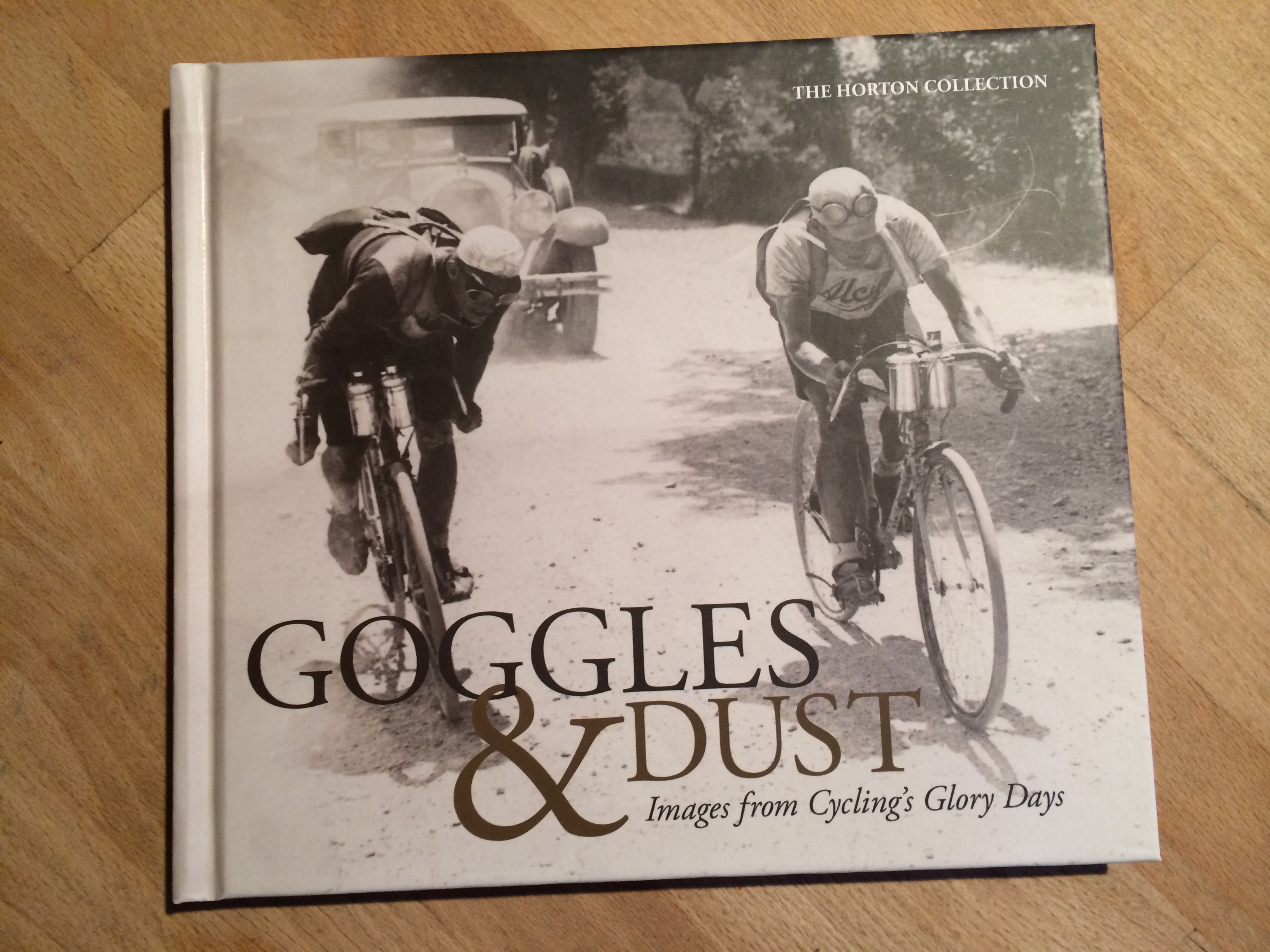
Being a cycling writer has a few perks but, for me at least, none are quite so fine as the unheralded arrival of a new book to review (although I am open to bigger and better options). The double surprise elements of first the arrival of the package itself and then of the content found therein makes each fresh delivery like a present for an overlooked birthday. And when the ‘present’ is something beautiful, or thought-provoking, or revealing, the feeling of being treated is multiplied exponentially. The arrival of Brett and Shelley Horton’s ‘Goggles & Dust’ was one of the those extra special days when all three boxes are ticked. Beautiful? Check. Thought-Provoking? Check. Revealing? Check.

Photo 29-09-2014 18 39 21

The Horton’s didn’t set out to specifically collect photographs of cycling’s so-called Glory Days. Their collections lay in the areas of jerseys and accessories but they found themselves increasingly relying on photos to help authenticate their items. So they began to pick up small photographic collections at flea markets, auctions and then some larger ones from defunct publications. It was something of a shock to them when they recently got around to cataloguing the photos and found that they had amassed over 350,000 images.

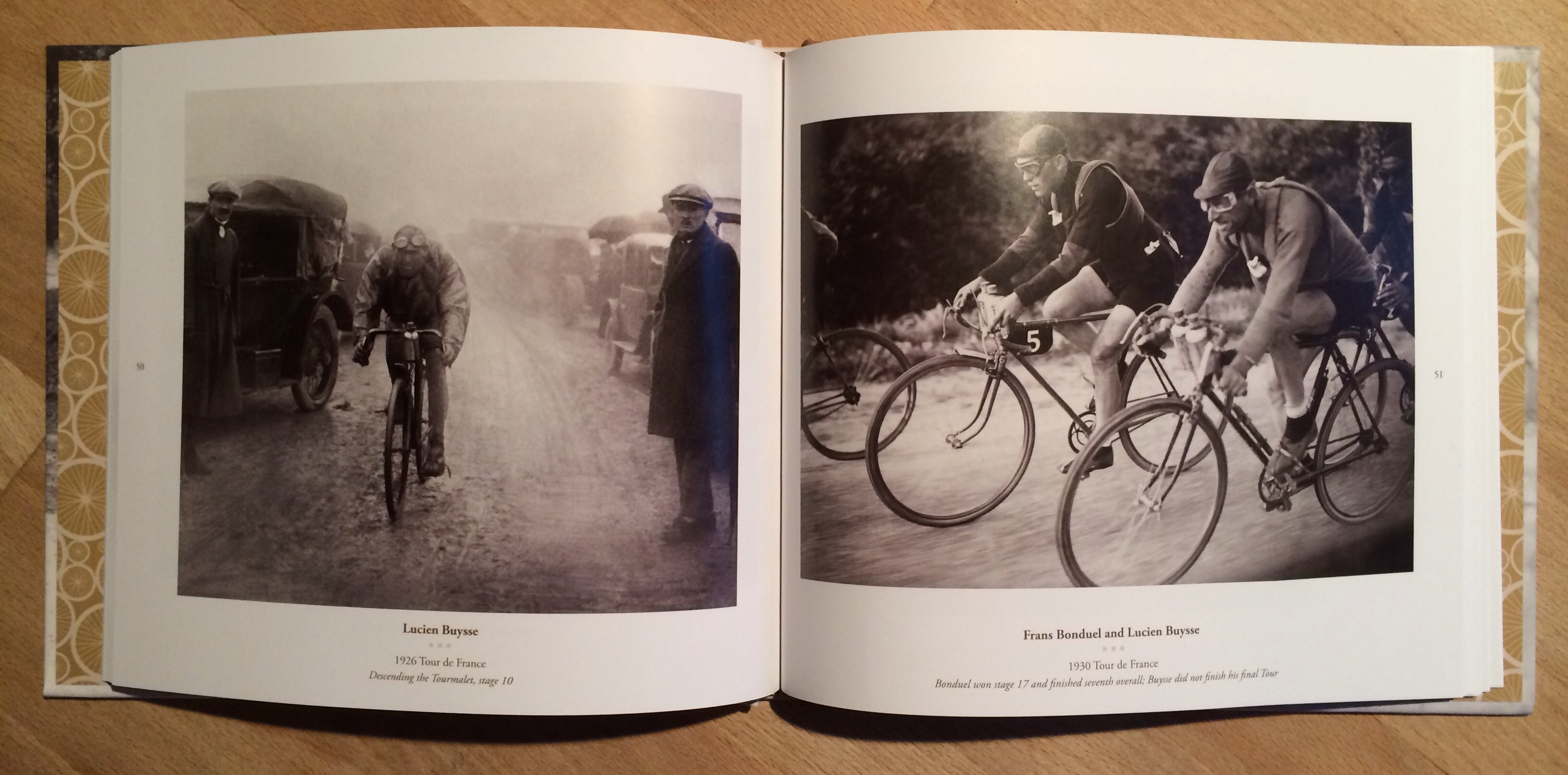
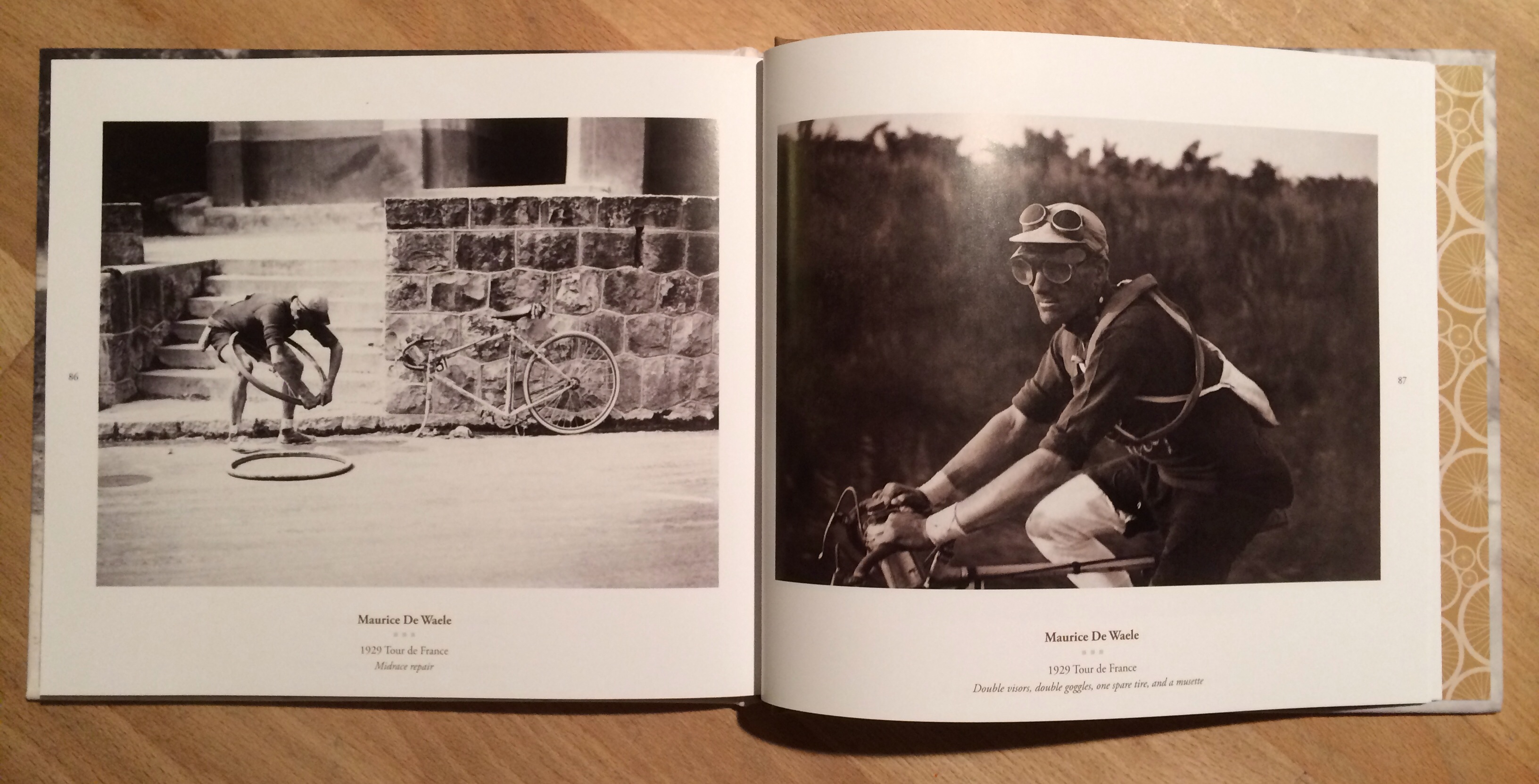
A mere one hundred of those beautiful images – all black and white from the Inter-War years – are collected in their new  book ‘Goggles & Dust’ (VeloPress RRP £11.99) but it is still more than enough to open the eyes to the rigours of road cycling during that era. The rickety-looking fixed geared bikes, the saggy woollen clothing, the goggles to protect the riders’ eyes from the ever-present dust of unsurfaced roads. These are the well understood trials of the early coureurs but here we also see the simple shared meals, the rudimentary aid for crash victims and, above all, the lines of the hardships of the road etched deeply on the faces of the winners and losers alike. ‘Giants of the Road’ they called them and it becomes apparent why. These creatures, barely human in some pictures, all too human in others, exist as part of the road itself. They bow to its whims, suffer against its hardships and emerge, not as victors or vanquishers of it, but as equals to it. Survivors of the road..

Photo 29-09-2014 18 40 35

The names conjure similarly evocative thoughts but here they are, in the flesh, in mostly previously unseen images. Bottechia, Buysse, LeDucq, Magne, Vietto, Lapébie, Egg, Pélissier and the occasional ‘Rider Unknown’, resolutely plying their trade. And for most it was a trade with all the attendant lack of wealth and comfort which that entails. A Hollywood style studio portrait of Pélissier – complete with Valentino-esque eyeliner and liberal retouching – seems hugely out of place amongst the mud, blood and tyre changes found elsewhere in the book but its inclusion acknowledges that these men were huge sporting heroes of their day.

Photo 29-09-2014 20 11 59

It’s not all pain and suffering though. Lighter moments are included as well; a joke between Leducq and Nicolas Frantz in the peloton, Tour winner Lapébie reunited with his wife and child after the rigours of the road, champagne for Buysse. What strikes most is the individualism of the riders. Though teams were prevalent from the earliest days, – the first picture in the book is of a team time trail – each man here seems to stand alone – making their triumphs and disasters all the more potent.

Reasonably priced and sized at around two-thirds of a piece of A4 paper, ‘Goggles & Dust’ is just the sort of book that would be an excellent addition to any cycling fans Christmas stocking and would provide a wonderful couple of hours diversion. Just choose a moment when it’s quiet and this will enrich your cycling life. We look forward to more gems from the Horton Collection.

Goggles and Dust – Images from Cycling’s Glory Days

THE HORTON COLLECTION

Lanterne Rouge by Max Leonard – Book Review

Finishing last in professional sport is not usually a cause for celebration. The aim is to win, to conquer, to vanquish. To the victor the spoils and all that. It’s a pretty Darwinian landscape out there. Thrive and survive or falter and fade. But even in Nature occasionally something unusual happens. The weakling persists; the unsuited somehow clings on, the underdog has his day.

Grand Tour cycling is unusual too. Unusually long, unusually hard, unusually constructed. Just finishing the gruelling three-week stage race is entry to an exclusive club; one that automatically carries the mark of a survivor. Seen through some eyes there are no losers at all. “I’m not last.” insisted Iker Flores when he was in just that position at the 2005 Tour de France, “Make no mistake. 200 came here. I am 120th. In another race I might be last. But not here.”

Photo_22092014_21_33_15.jpg

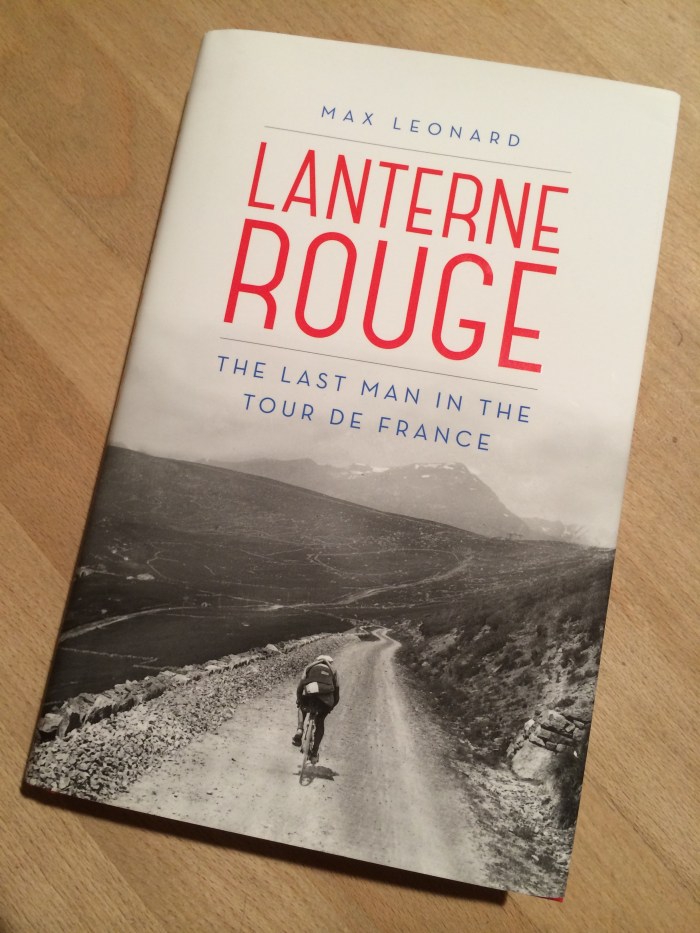
The Tour de France in particular has a long rich history of celebrating the man who arrives in Paris last. Founder Henry Desgrange’s publicly-stated aim that “The ideal Tour would be one in which only one rider survives the ordeal” makes every finisher a winner in some sense and Max Leonard’s engaging book Lanterne Rouge – The Last Man in the Tour de France (Yellow Jersey Press. RRP £16.99 Hardcover, £6.99 Kindle) on the history and mindsets of these “Lanterne Rouges” is just that; a celebration. He examines the reasons behind the longevity of and affection for this most historical of ‘wooden spoons’, talks with numerous Lanternes to see how they view their ‘achievement’, and ponders what place such an accolade has in their (and our) lives.

For some the reasoning is quite plain. In past decades the ‘fame’ that accompanied being last-placed in the Tour made it a much more lucrative option than finishing tenth from last – or even tenth overall – and so, for some, it became a goal in its own right. Being Lanterne Rouge (named after the red light that was traditionally hing form the last train carriage to help station masters know that none had become unhooked) guaranteed exposure for the rider’s sponsors and invites to the all-important post Tour exhibition criteriums for the rider himself. For some the goal of finishing last became a positive aim rather than just the consolation prize it began its life as, and throughout the book Leonard recounts tales of riders using all their racing guile, experience and tactical inventiveness in order to make the fine judgement between losing bundles of time and finishing within the time-cut. 

In looking for the essence of the Lanterne Leonard inevitably unearths a few of the characters of the sport. The Lanterne who battled through through early sickness and then managed a stage win over the great Eddy Merckx later in the same race; the exotic North-African who reckoned he was poisoned and then expertly spun his own PR in order to stay in the headlines; the brothers were both Lanterne Rouge during the reign of Lance Armstrong. With chapters covering almost every decade since the race’s inception in 1903, the book also acts as an historical mirror to the privations of those who undertook La Grande Boucle. The tale of Jules Nempon – the sole surviving ‘unsupported’ rider of 1919 – is particularly illuminating. He tracks some of the surviving Lanternes down – men like triple Lanterne Wim Vansevenant, epic baradour Sandy Casar and the man who probably fought ‘hardest’ of all to be Lanterne Rouge, Gerhard Schönbacher but others escape him – most notably Philippe Gaumont – but again, this just adds to the story as it is understandable that some might not cherish their award as dearly as others. 

Leonard’s own battles on the bike also feature in the book. His writing style is both engaging and engaged. His journey along the road of discovery is a much a part of the book as the reminisces of the pro riders who suffered so mightily to finish dead-last. His trials and tribulations interviewing the Lanternes is his own Grand Tour with good days and bad days. I heard Max talk about the book at the Rapha Tempest Festival back in July and found his enthusiasm for the subject quite captivating. As we saw in Yorkshire, the Tour is a huge beast these days with the gaze often relentlessly focussed on the winning and the winners but these little sideways looks at the sport – like Charly Wegelius’ excellent ‘Domestique‘ – offer a new persepctive and understanding to the races that we often feel that we know so well.

Today’s Lanterne Rouges – more comfortably paid and looked after than their predecessors – do not need the limelight in same the way that their earlier counterparts did and enjoy relative anonymity these days. This summer Giant Shimano’s Ji Cheng was the most recent to join the roll-call of Lanternes. Quite fittingly, he will not be the last.

Lanterne Rouge – The Last Man in the Tour de France

Poster Boys – Cycling Jersey Prints by Rouleur and David Sparshott

A new appearance in the Rouleur online shop this week attracted my attention and also reminded me of something similar – and equally beautiful – that has been around around for a little while..

Two different takes of a poster of various cycling jerseys. The limited edition Rouleur version (£45.00, A2 sized), by illustrator Beach, chronologically details the jersey’s of the 101 Tour de France winners in an attractive flat graphic style whilst David Sparshott’s (£55, A2 size) pencil crayon sketches capture a wide range of vintage jerseys in his signature style. Both prints are very simple and just let the beauty of the jerseys – and the magic of a bit of repetition – do the hardwork.

Continue reading

Yorkshire’s Grand Depart – Rapha Tempest Festival

It’s the night before the Grand Départ and things are not looking too rosy in ‘God’s Own Country’. To use the local phrase, it is ‘siling down’ and the floodlights outside the Rapha HQ tent at Broughton Hall in Yorkshire are in danger of being extinguished by a deluge of fierce intensity.  The rain is beating heavily on the plasticised canvas marquee, providing additional percussion to the Friday night beats being played by Rapha DJ’s Joey Hall and Festus. The throng of people inside are having a good time enjoying the tunes, the beer and the company but eyes keep flicking outside and you can feel minds wondering whether the name of the Tempest Festival will prove prophetic. I’m inside too, chatting to a couple of guys sitting at one of the long tables in the bar end of the tent. One notices my concern and leans in conspiratorially. “Don’t worry.” he says over the noise of the music. “I work as a trader in Amsterdam. I have to study the weather to make my bets. The sun will come out at eight o’clock tomorrow morning. I promise you.”

Continue reading

Breaking The Chain – Book Review – Willy Voet

We all know the facts: Belgian soigneur Willy Voet is stopped by customs officers on his way to the 1998 Tour de France start in Dublin. In his car are a massive amount of performance enhancing drugs, destined for the riders on the squad that Willy works for and by which the ensuing scandal will be known. Festina. The lid on organised, team-wide doping is lifted and the Tour comes close to collapse as, over the following days, police raid rooms and haul riders off to cells. Teams are thrown off the Tour and reputations are ruined. But the Tour somehow survives this three week evisceration with Marco Pantani winning but the writing is on the wall for a generation of dopers. Well, it is until the following year when it all starts all over again on an even bigger scale..

Continue reading