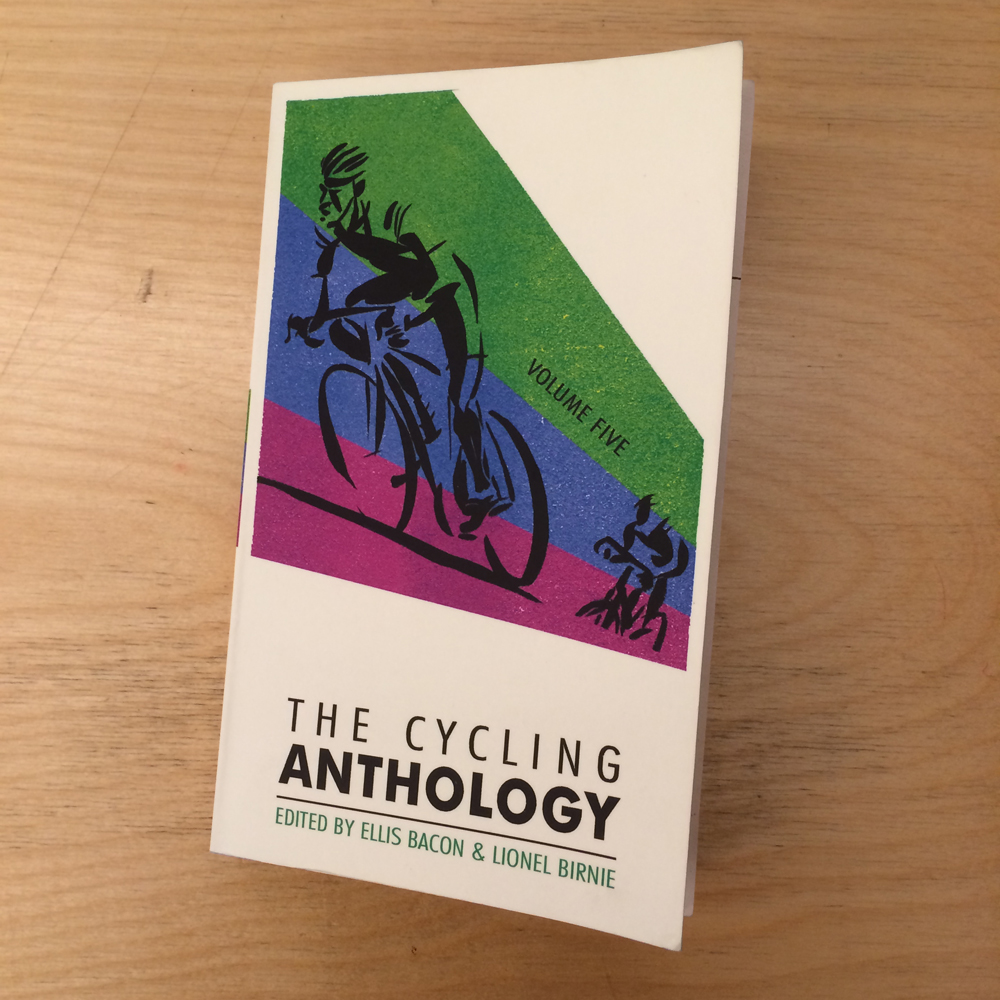
The Cycling Anthology Volume 5 – Book Review

It is a strange feeling to realise that I have not reviewed a Cycling Anthology before. They have popped up on the blog in the past on Christmas wish lists and the launch of Volume 4 featured, tangentially at least, in my Portrait of The Cycling Podcast feature but I must admit that I was somewhat chastened to find I’ve not previously written specifically about these excellent collections of original writing. As the series now reaches Volume 5 the time has come to rectify such a glaring oversight.

Photo 29-10-2014 13 44 27

The premise of the Anthologies remains simple: get the very best cycling journalist’s around and give them free rein to write, at length, on a subject of their own choosing, and share the sales income equally. It’s an appealingly noble formula that has served editors Ellis Bacon and Lionel Birnie well over the editions and Volume 5 – the second to be published by Yellow Jersey Press (RRP £8.99, paperback) – is no exception. The range and quality of the writing is as high as ever and this edition can be seen as a particularly strong one.

In the latest offering, alongside Bacon and Birnie who both offer excellent chapters, are such notable cycling stalwarts as Brendan Gallagher, Jeremy Whittle, Francois Thomazeau, Edward Pickering, Andy McGrath, Matt Beaudin, Daniel Friebe, and Matt McGeehan. The ten chapters range widely; going back as much as a century historically and as far as Colombia geographically. We find treatises on that most elusive of cycling qualities: panache, alongside a revealing look at the Tour de France’s least well known director, Jean-Francois Naquet-Radiguet.. Who? Well, exactly. We have a report from the 2014 Track World Champs in Cali, Columbia and an elegy to the forgotten Pyrenean summit finish in Superbagneres. All are good reads in their own right but collected together in short chapter form they give us a fantastic tasting-plate of words that the authors have really invested their hearts and souls into.

The stand-out chapters for me this time around are equally varied. The volume rightfully opens with Brendan Gallagher’s “Soldiers of the Road”, covering his thoughts on the centenary of the start of World War I, as seen through the veil of the cyclists who fought (and often perished) in the conflict. As well as discussing the three Tour winners who died, Lapize, Faber and Petit-Breton, Gallagher also contextualises the War in terms of the bicycle itself. A key military ‘vehicle’ at the time, it is estimated that over 100,000 British soldiers served ‘a la velo‘ during the Great War. The number for the French and Belgians is significantly higher. The sheer scale of the conflict is always bewildering but, as usual, it’s the human touch that hits home hardest. Gallagher’s poignant revelations about reconnaissance cyclist John Henry Parr, the very first British soldier to be killed in the fighting, bring the madness and confusion of war home in the most personal way. His loss serves as a marker for all those who followed.

Loss of a different kind is covered excellently by Andy McGrath in his chapter “The Search For Joey McLoughlin”. McLoughlin was a promising Liverpudlian rider in the  late 1980’s, the winner of the 1986 Milk Race, who, like many before, headed to the Continent to fulfil his pro-cycling dreams. A contract with the Z-Peugeot team in 1988 that should have been the start of something great was really the beginning of the end. He returned to England and retired a year later, aged just 26. A few years later he disappeared completely, nit just from his cycling friends and work associates but also from his family and relations as well. McGrath starts the process of tracking him down but it will take more time and a longer story to solve this particular mystery.

Elsewhere, Matthew Beaudin’s “The Sounds of Cycling”, an aural analysis of the 2014 Tour de France, is a structural tour de force – a brilliant conceived and executed diary of a month away from home, as told through the audible assault that defines the chaos of the Tour. It’s quite wonderful. Similarly bold is Ellis Bacon’s retelling of the same Tour in rhyming verse. I must admit that I approached this chapter with significant apprehension but Bacon manages the seemingly impossible and actually leaves you wanting more. Chapeau indeed sir..

The four preceding volumes are also still available and have become a valued repository of cycling fact and cycling whimsy in my house. Even at the distance of such an overdue review, I would heartily recommend them all..

The Cycling Anthology Volume 5 will be released on 6th November.

Parkour Ride – Road vs Fixed vs BMX vs Mountain Bike.

It’s the banging on the safety barriers that tells us they are coming. A wave of frenetic beating rising up from below, masking the announcer’s urgent voice and even threatening the pumping music which is bouncing around the concrete walls of the multi-storey carpark. Overhead a police helicopter clatters, searching for something off near The River whilst just to the North the clustered towers of The City glare provocatively in the fading dusk light, finally hiding the last of the unseasonal October sun which followed the earlier autumnal rain. The announcer’s muffled exhortations become ever more drowned out by the banging as the riders approach the roof but then, as they burst out of the dark cavern-like mouth onto level 10, the crescendo dissipates as it released from the pressured confines of below and the experience becomes visual. Continue reading

Goggles & Dust by Brett and Shelley Horton – Book Review

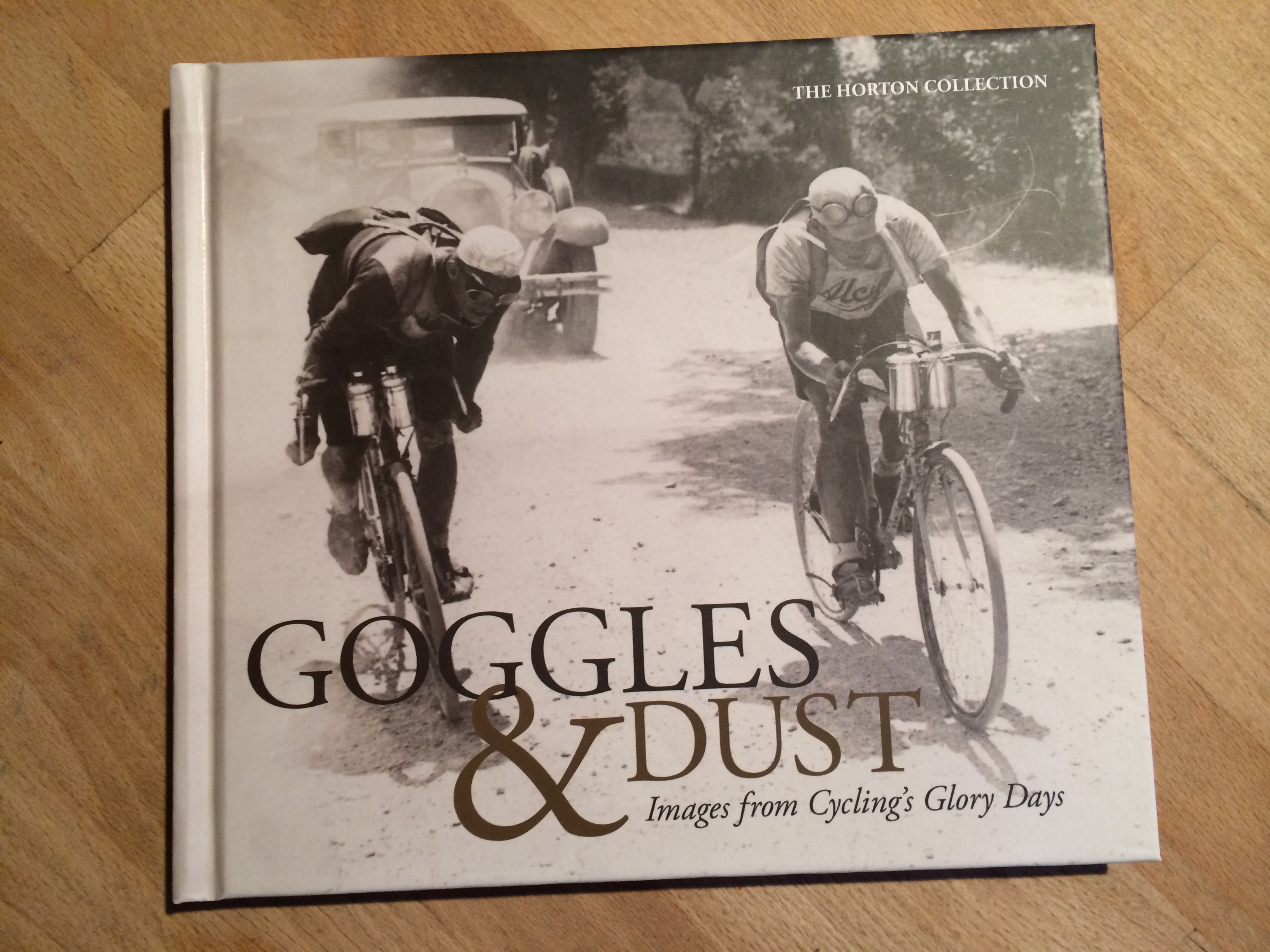
Being a cycling writer has a few perks but, for me at least, none are quite so fine as the unheralded arrival of a new book to review (although I am open to bigger and better options). The double surprise elements of first the arrival of the package itself and then of the content found therein makes each fresh delivery like a present for an overlooked birthday. And when the ‘present’ is something beautiful, or thought-provoking, or revealing, the feeling of being treated is multiplied exponentially. The arrival of Brett and Shelley Horton’s ‘Goggles & Dust’ was one of the those extra special days when all three boxes are ticked. Beautiful? Check. Thought-Provoking? Check. Revealing? Check.

Photo 29-09-2014 18 39 21

The Horton’s didn’t set out to specifically collect photographs of cycling’s so-called Glory Days. Their collections lay in the areas of jerseys and accessories but they found themselves increasingly relying on photos to help authenticate their items. So they began to pick up small photographic collections at flea markets, auctions and then some larger ones from defunct publications. It was something of a shock to them when they recently got around to cataloguing the photos and found that they had amassed over 350,000 images.

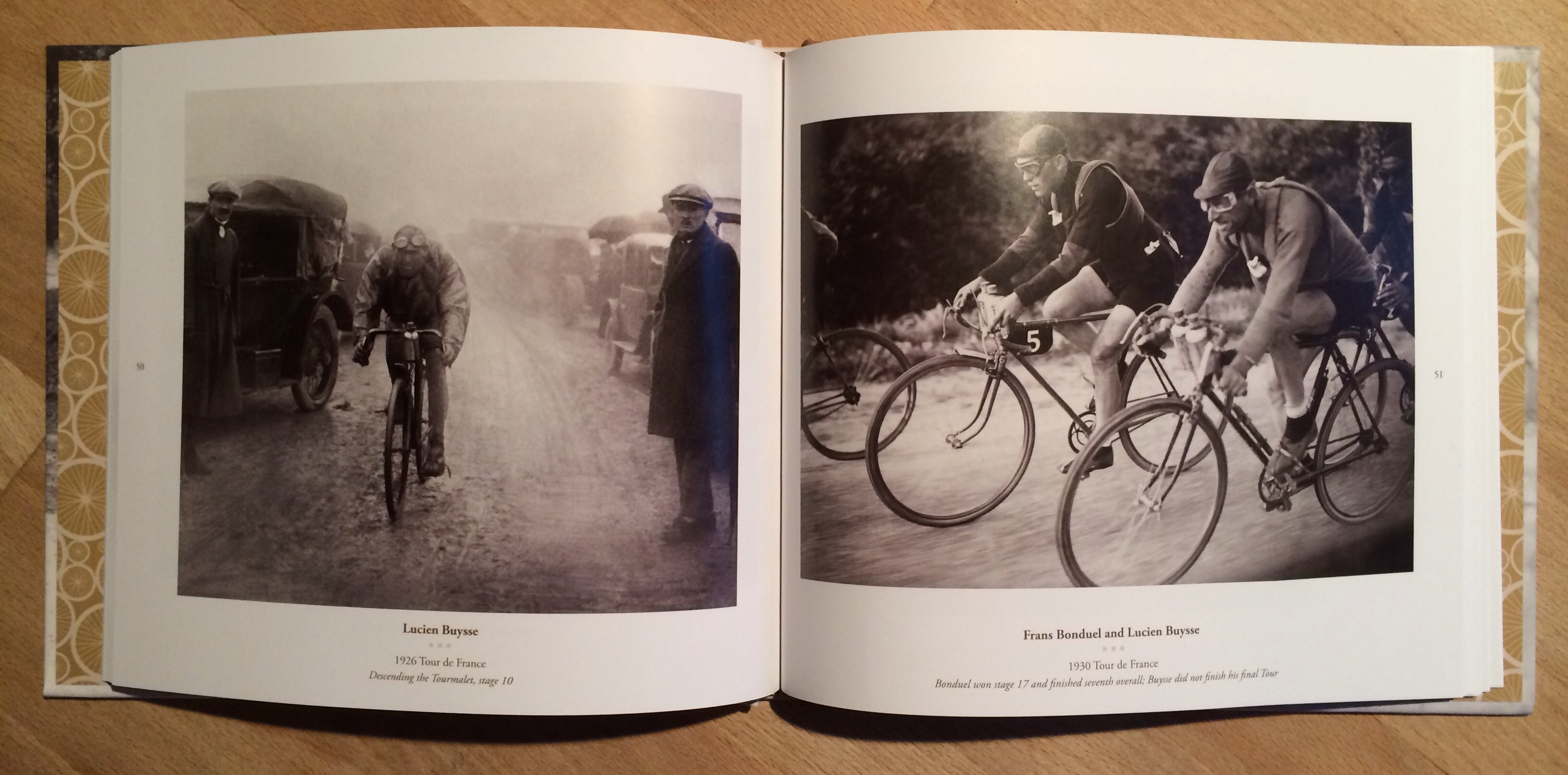
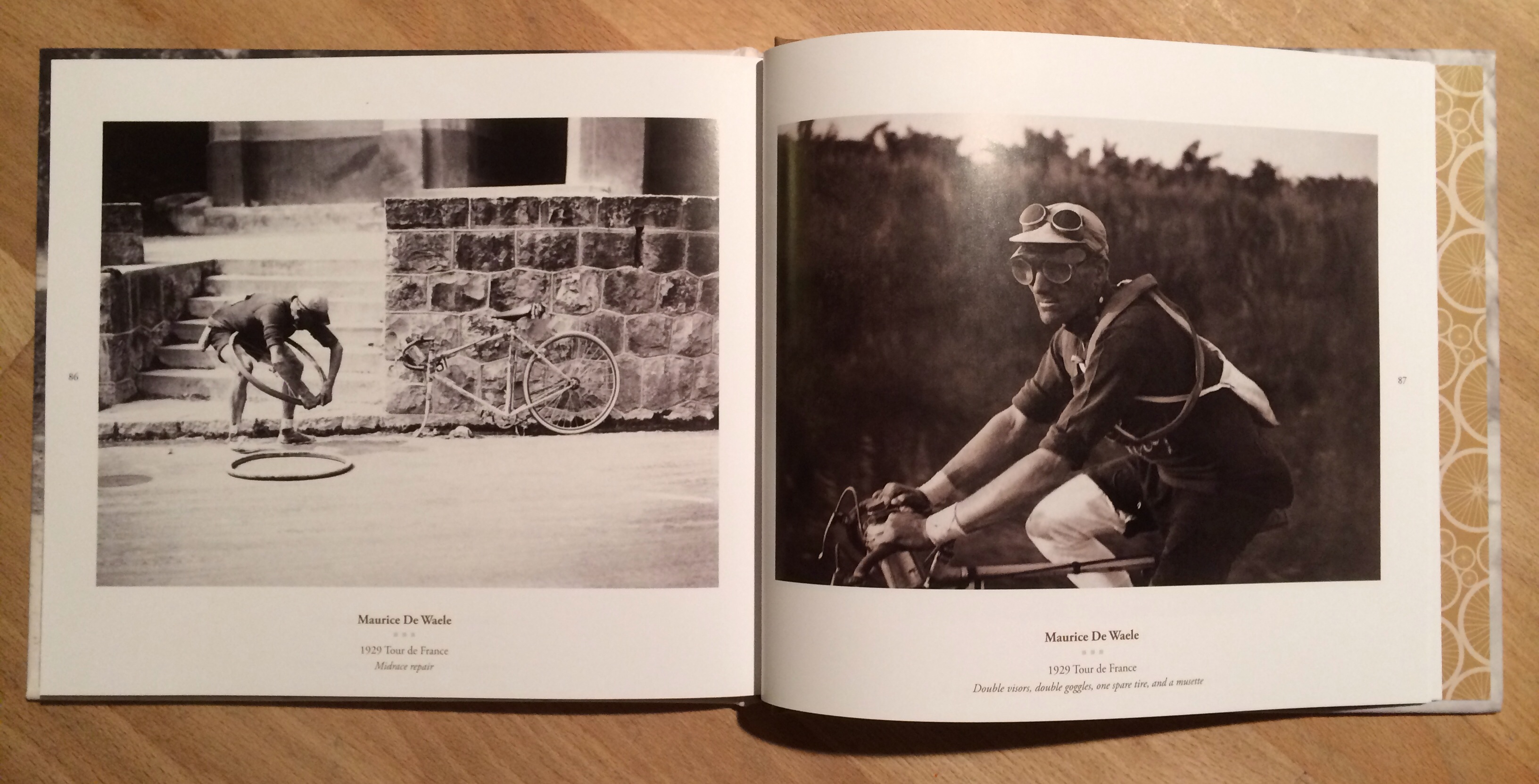
A mere one hundred of those beautiful images – all black and white from the Inter-War years – are collected in their new  book ‘Goggles & Dust’ (VeloPress RRP £11.99) but it is still more than enough to open the eyes to the rigours of road cycling during that era. The rickety-looking fixed geared bikes, the saggy woollen clothing, the goggles to protect the riders’ eyes from the ever-present dust of unsurfaced roads. These are the well understood trials of the early coureurs but here we also see the simple shared meals, the rudimentary aid for crash victims and, above all, the lines of the hardships of the road etched deeply on the faces of the winners and losers alike. ‘Giants of the Road’ they called them and it becomes apparent why. These creatures, barely human in some pictures, all too human in others, exist as part of the road itself. They bow to its whims, suffer against its hardships and emerge, not as victors or vanquishers of it, but as equals to it. Survivors of the road..

Photo 29-09-2014 18 40 35

The names conjure similarly evocative thoughts but here they are, in the flesh, in mostly previously unseen images. Bottechia, Buysse, LeDucq, Magne, Vietto, Lapébie, Egg, Pélissier and the occasional ‘Rider Unknown’, resolutely plying their trade. And for most it was a trade with all the attendant lack of wealth and comfort which that entails. A Hollywood style studio portrait of Pélissier – complete with Valentino-esque eyeliner and liberal retouching – seems hugely out of place amongst the mud, blood and tyre changes found elsewhere in the book but its inclusion acknowledges that these men were huge sporting heroes of their day.

Photo 29-09-2014 20 11 59

It’s not all pain and suffering though. Lighter moments are included as well; a joke between Leducq and Nicolas Frantz in the peloton, Tour winner Lapébie reunited with his wife and child after the rigours of the road, champagne for Buysse. What strikes most is the individualism of the riders. Though teams were prevalent from the earliest days, – the first picture in the book is of a team time trail – each man here seems to stand alone – making their triumphs and disasters all the more potent.

Reasonably priced and sized at around two-thirds of a piece of A4 paper, ‘Goggles & Dust’ is just the sort of book that would be an excellent addition to any cycling fans Christmas stocking and would provide a wonderful couple of hours diversion. Just choose a moment when it’s quiet and this will enrich your cycling life. We look forward to more gems from the Horton Collection.

Goggles and Dust – Images from Cycling’s Glory Days

THE HORTON COLLECTION

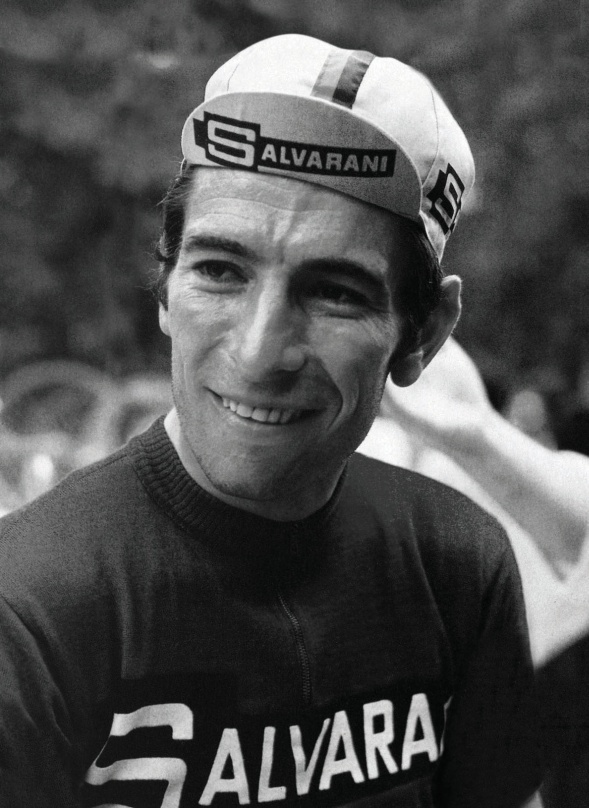
Buon Compleanno – Felice Gimondi

Happy Birthday Felice Gimondi “The Aristocrat27.09.1942


Giro d’Italia  Winner – 1967, ’69, ’76;

Tour de France Winner – 1965

Vuelta a España Winner – 1968

World Champion 1973

Paris-Roubaix 1966; Giro di Lombardia 1966, ’73; Milan San Remo 1974

felice-gimondi

A prodigious talent across many road racing disciplines, Gimondi can still be viewed as the last great Italian all-rounder. A winner of Classics, World Championships and all three Grand Tours – including the Tour de France at his first attempt when he was parachuted into the team at the last moment following a team-mates withdrawal. Less famous than nearly all the other riders who can boast such a rounded palmares, Gimondi nevertheless remains an important link to the broader landscape of cycling’s historical period.

Velocast ‘CycLego’ T-shirts

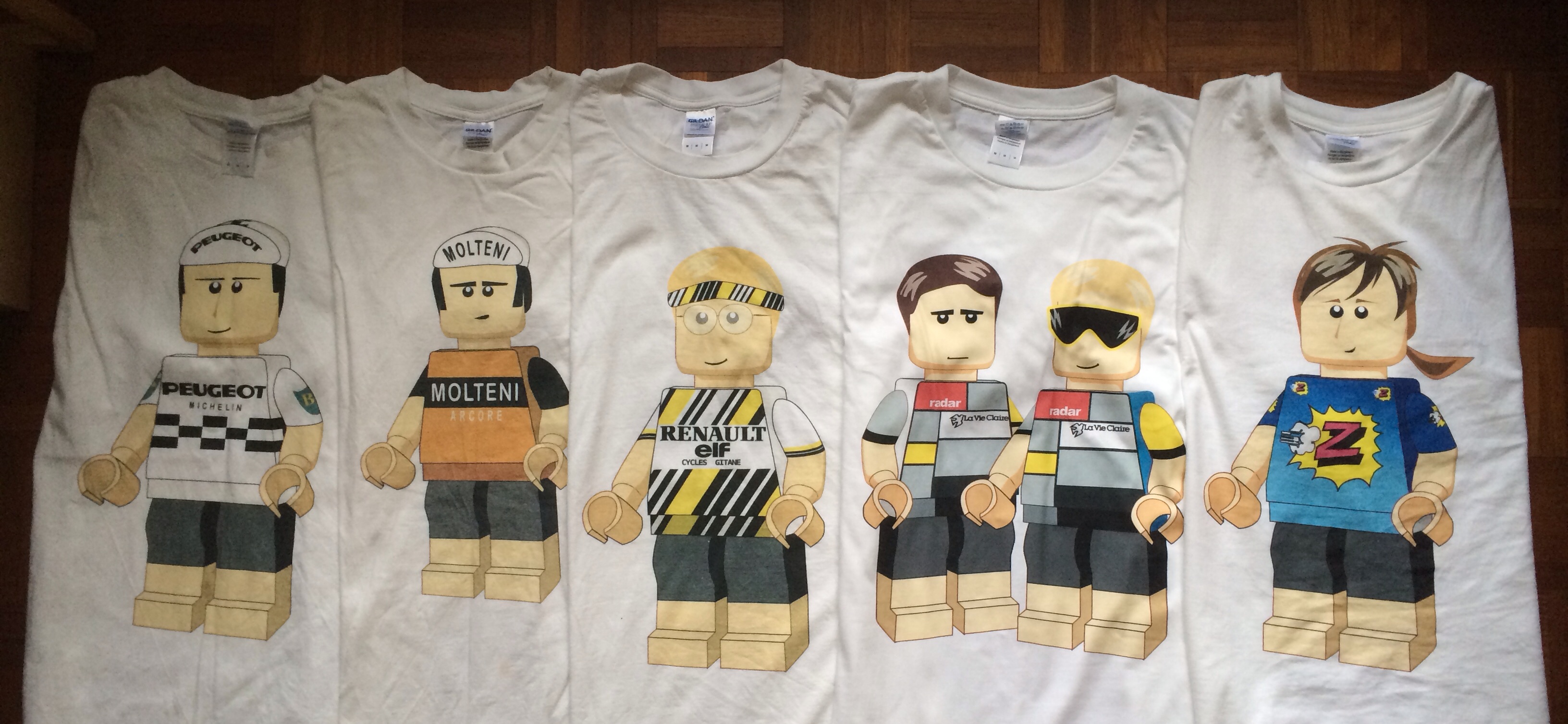
Followers of my Instagram account – @thejerseypocket – may have noticed a recurring feature popping up in recent pictures of me.. I’ve been rather taken by Velocast’s Lego cyclists T-shirts and have been slowly assembling the full set of the old-school racers. Having a couple of young children who are big fans of both cycling and the ubiquitous Danish plastic blocks has made this collection a little easier to explain away but the truth is that the majority of the riders whom Velocast have chosen to re-immortalise are the self-same heroes that I was watching whilst still mucking about with Lego in the first place – so the match-up is very apt.

Tom Simpson in classic black and white Peugeot kit; Eddy Merckx in the brilliant black and orange of Molteni; the young peloton-destroying ‘Professeur’ Fignon in the furiously slanting lines of Renault-Elf; Hinault and Lemond locked together in their famous tussle for control of the Mondrianesque La Vie Claire; and, of course, Robert Millar (complete with ponytail) resplendent in the Z-Vêtements jersey that, for me at least, marked the end of the classic cycling era.

Photo 27-09-2014 17 58 09

The range goes a bit further with Taylor Phinney and Marianne Vos but it’s the old school guys that really took my fancy. It’s hard to pick a favourite. I like the Hinault/Lemond double because it tells a story but I wear Eddy the most. The slightly smaller-sized figure on the jersey works better I think, and as Eddy won practically everything else it seems right he should win this little battle too.

The T-shirts are available at the velocast.cc shop priced £25.

Every Bike I Have Ever Owned.. UPDATED

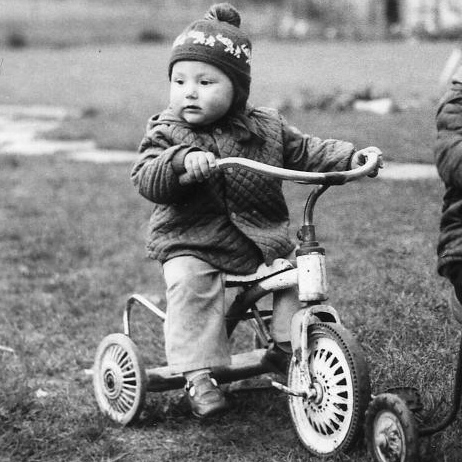
1. Red tricycle with white wheels – Got the front wheel caught in a drainhole on our drive one summer day, flipped over the top and scraped the hell out of my 3 year old bare belly. Ouch. And, yes, that is me below… 

trikes April 1976

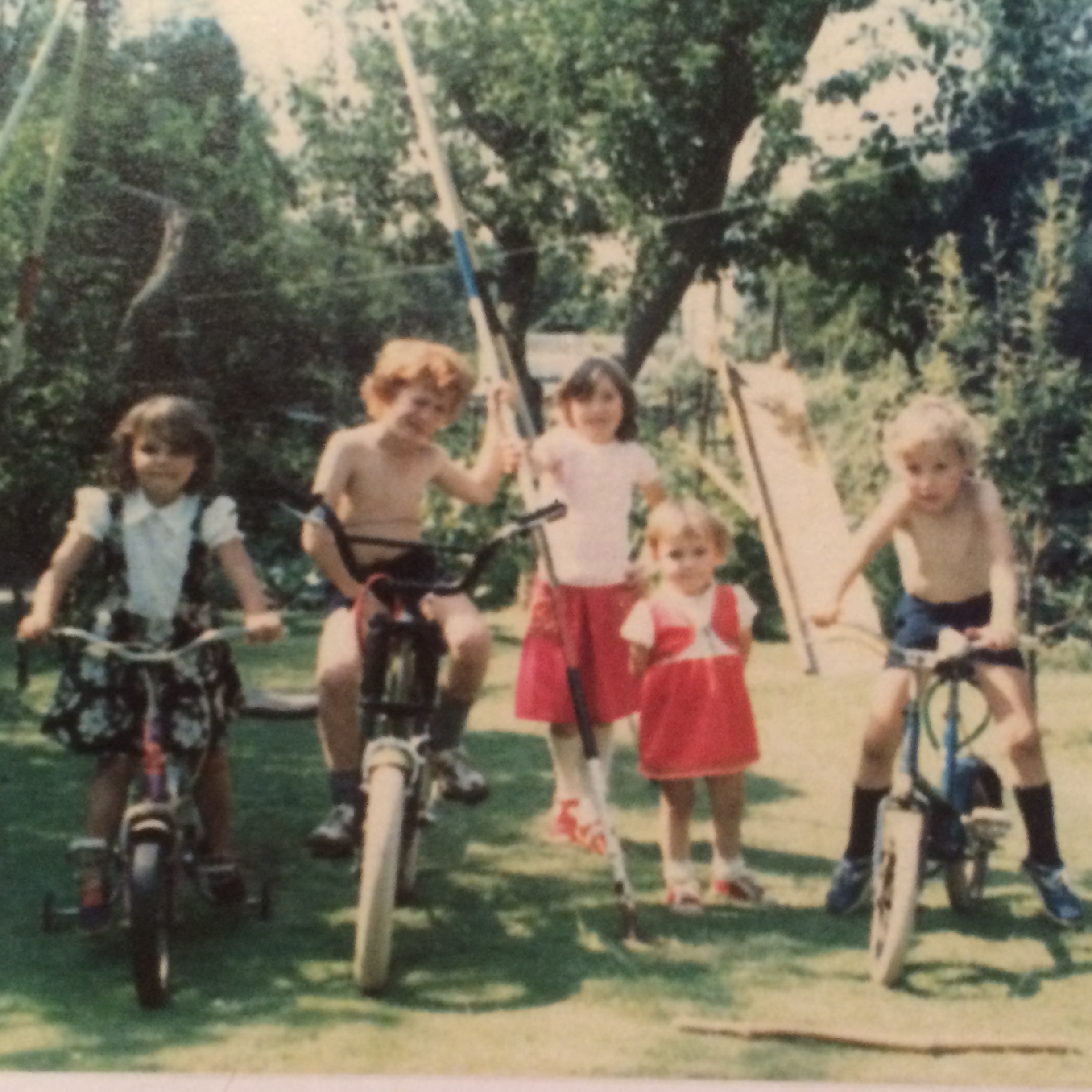
2. Purple 2 wheeler – solid wheels. Learnt to ride on that one… My sister is on it here. I’m on my brother’s old blue bike and he is on his new green Raleigh Strika.. Just don’t mention his white wheels – found by my dad as an emergency replacement the day before his birthday (the original ones both punctured) – they were not well received.

Photo 26-09-2014 20 21 57

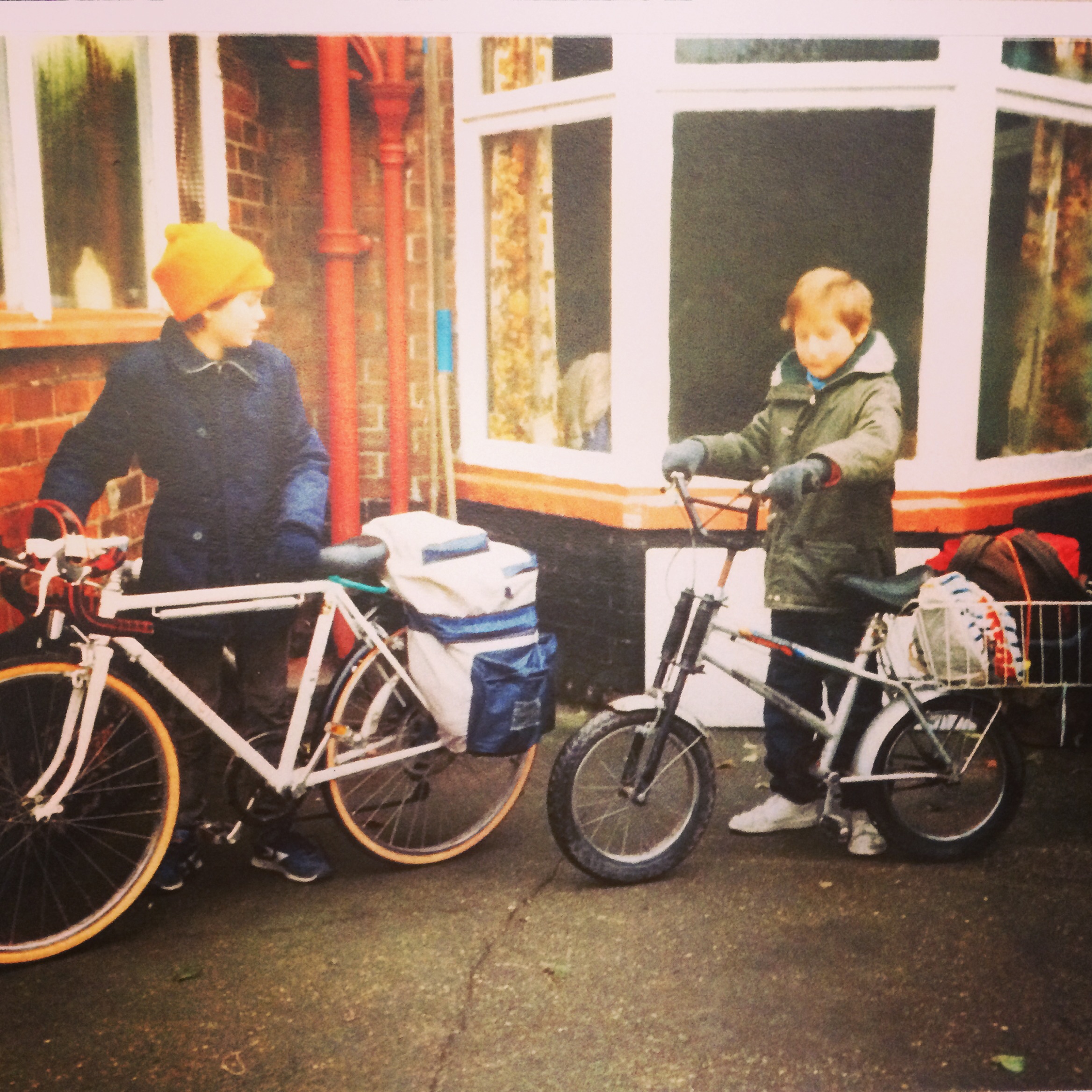
3. Silver Raleigh Strika – Sadly not the back-pedal brake model.. Loved the fake plastic ‘suspension’ parts on the front forks. I eventually outgrew it. The picture shows it on one of it’s last outings: complete with a wired-on shopping basket in an early cycle-touring set-up for a weekend away in November 1985.

Photo 26-09-2014 12 53 09

4. Blue Raleigh Viper. 5 speed. Drop Handlebars. Christmas present – 1985. I thought I was the Boss on this. I flipped and chopped the bars and eventually sold it about six years later.

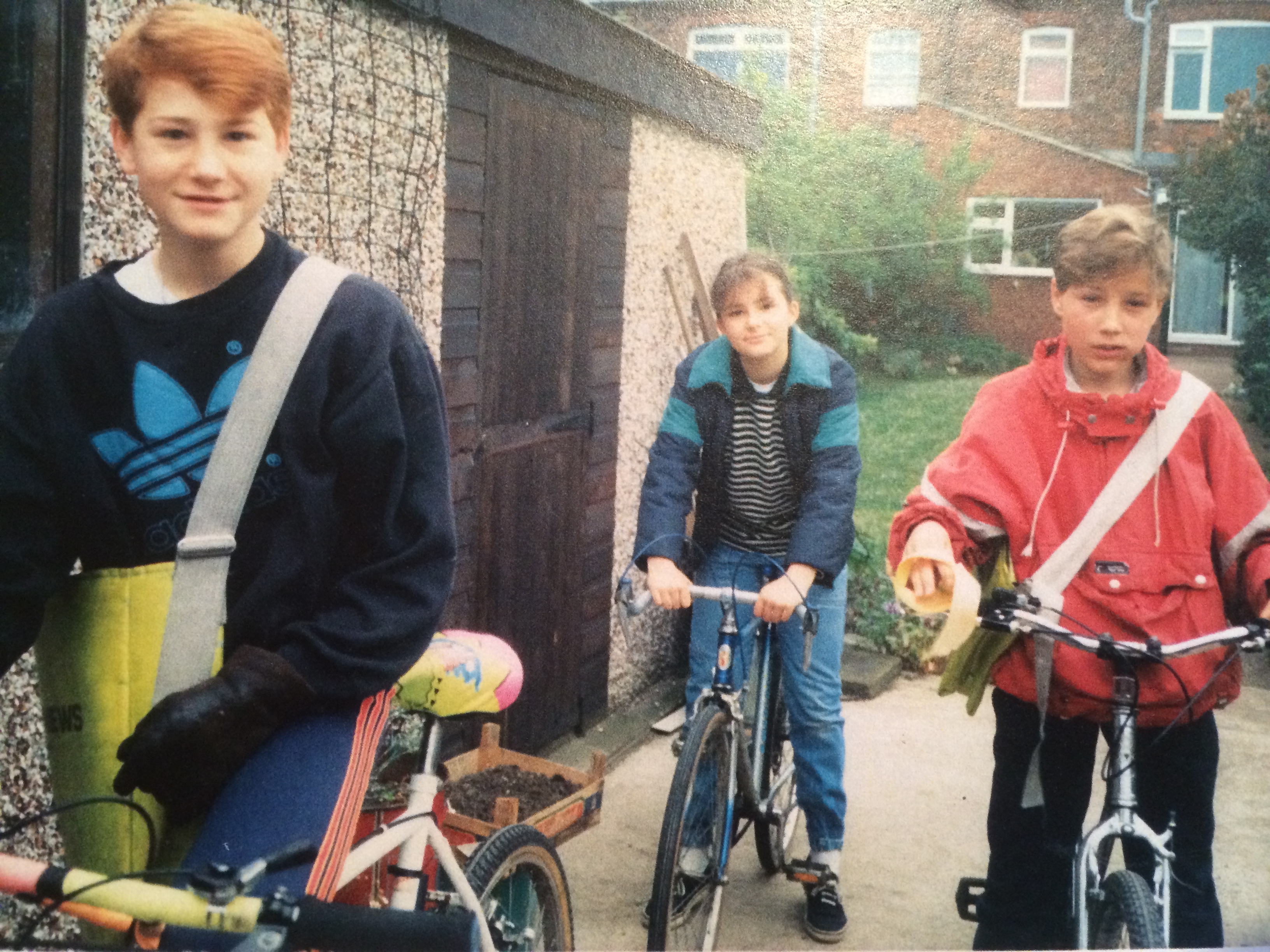
5. Chrome Bomber – bought from the Classifieds in the Hull Daily Mail. First bike I paid for. (Absolutely no idea where this one went.. Possibly into the River Hull for a dare.) This is the only picture of it I can find. My sister is riding the converted Viper 5.

Photo 26-09-2014 18 06 38

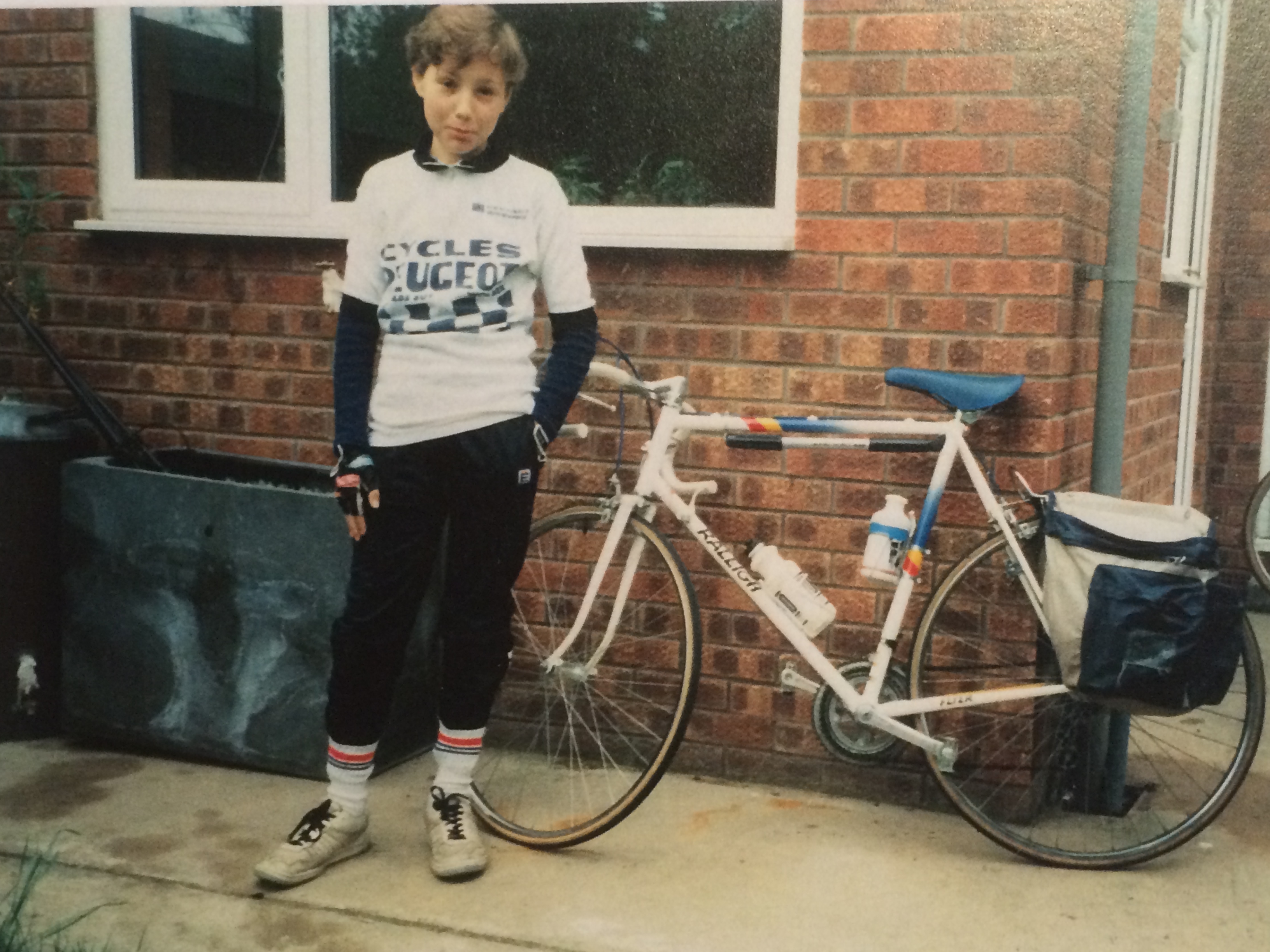
6. Raleigh Flyer 10 speed. White with Blue Saddle. Did the Coast to Coast and back with my brother on this aged 14. Can still feel the saddle now. (Stolen – Paragon Hotel Hull, Saturday Job)

Photo 26-09-2014 18 07 59

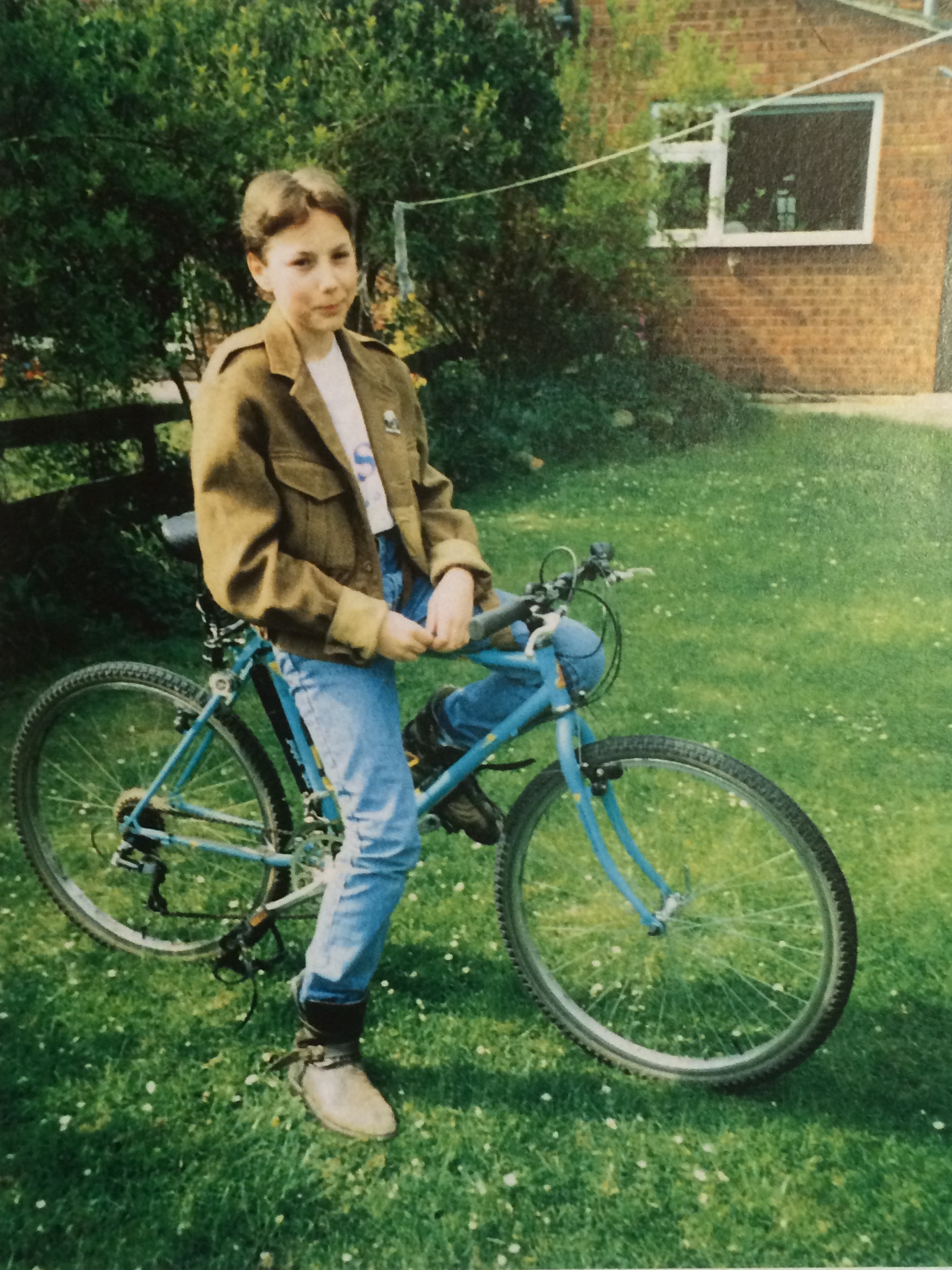
7. Raleigh Montage mountain bike. Green. Non-indexed thumb shifters. First Mountain Bike. (Stolen – outside paper shop – walked my  paper round for f***ing months afterwards)

Photo 26-09-2014 18 08 34

8. Purple Kuhii Unique. Bloody Heavy – Have never seen this make anywhere else… (Had it for years. Finally stolen – RCA, London, 1999) Not only do I not have a picture of this one – the entire internet doesn’t either…

9. Giant Mountain bike. Replaced the Kuhii. (Stolen after 3 weeks – RCA – not sadly missed – it was shit)

10. Kuhii Unique. (It turned up again at the RCA bike-stands with someone else’s lock on it. Put another lock on it and informed the Police. It was re-stolen the next day – RCA, London)

11. Silver & Purple Raleigh Scorpio. Given by a friend to ride a triathlon. (Given away in the Great Bike Clearance of 2017)

IMG_7782

12. Giant OCR 1. Thought I might have a future in triathlons. (Stolen after 2 months outside Shoreditch Electricity Showrooms, London)

152-5221_IMG_2

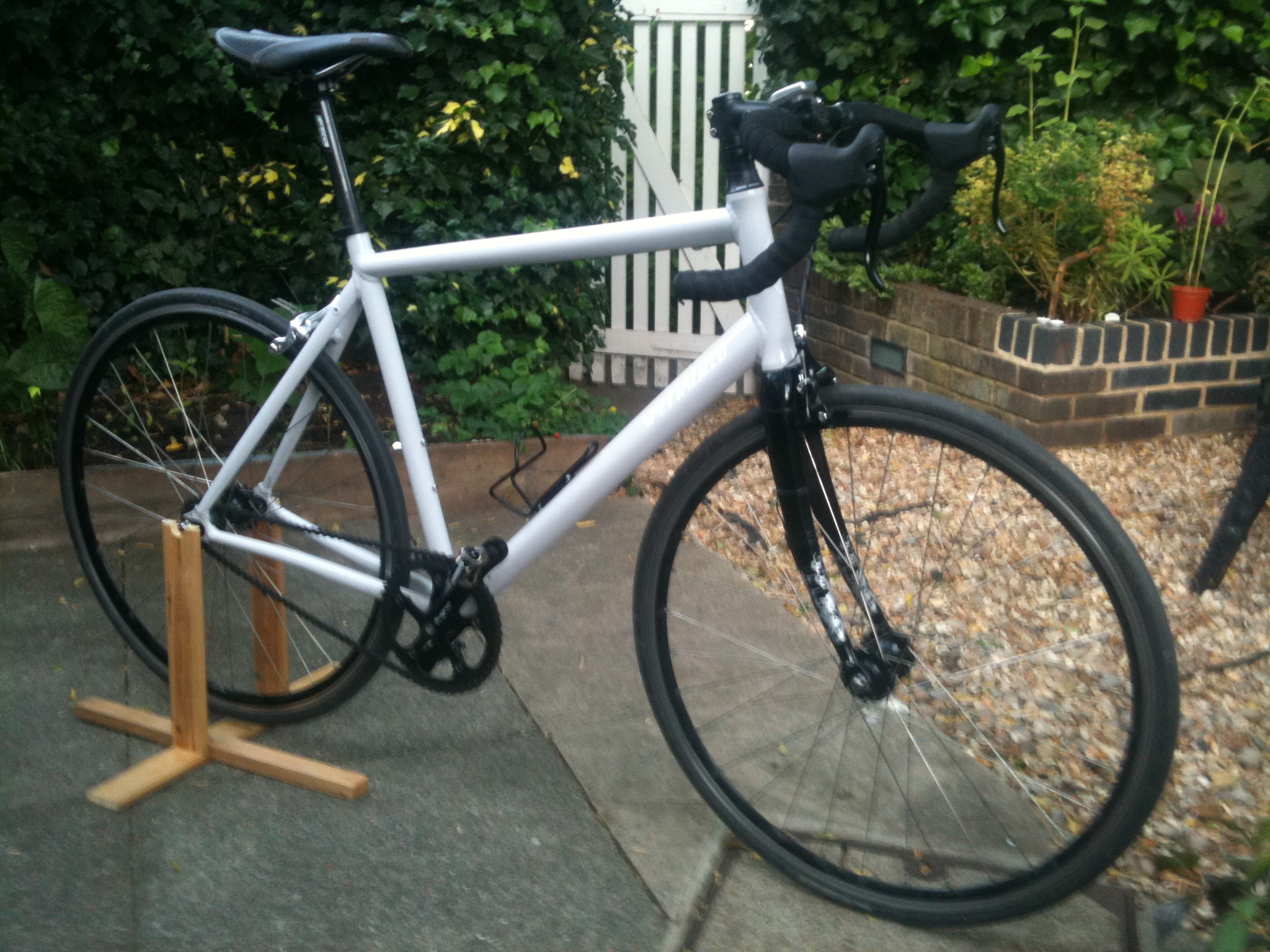
13. Langster Alu Single Speed. My first LFGSS forum bike. The “shit brown” one. My first build. Resprayed it grey and loved it (Stolen 2011 – Blackheath)

IMG_0814

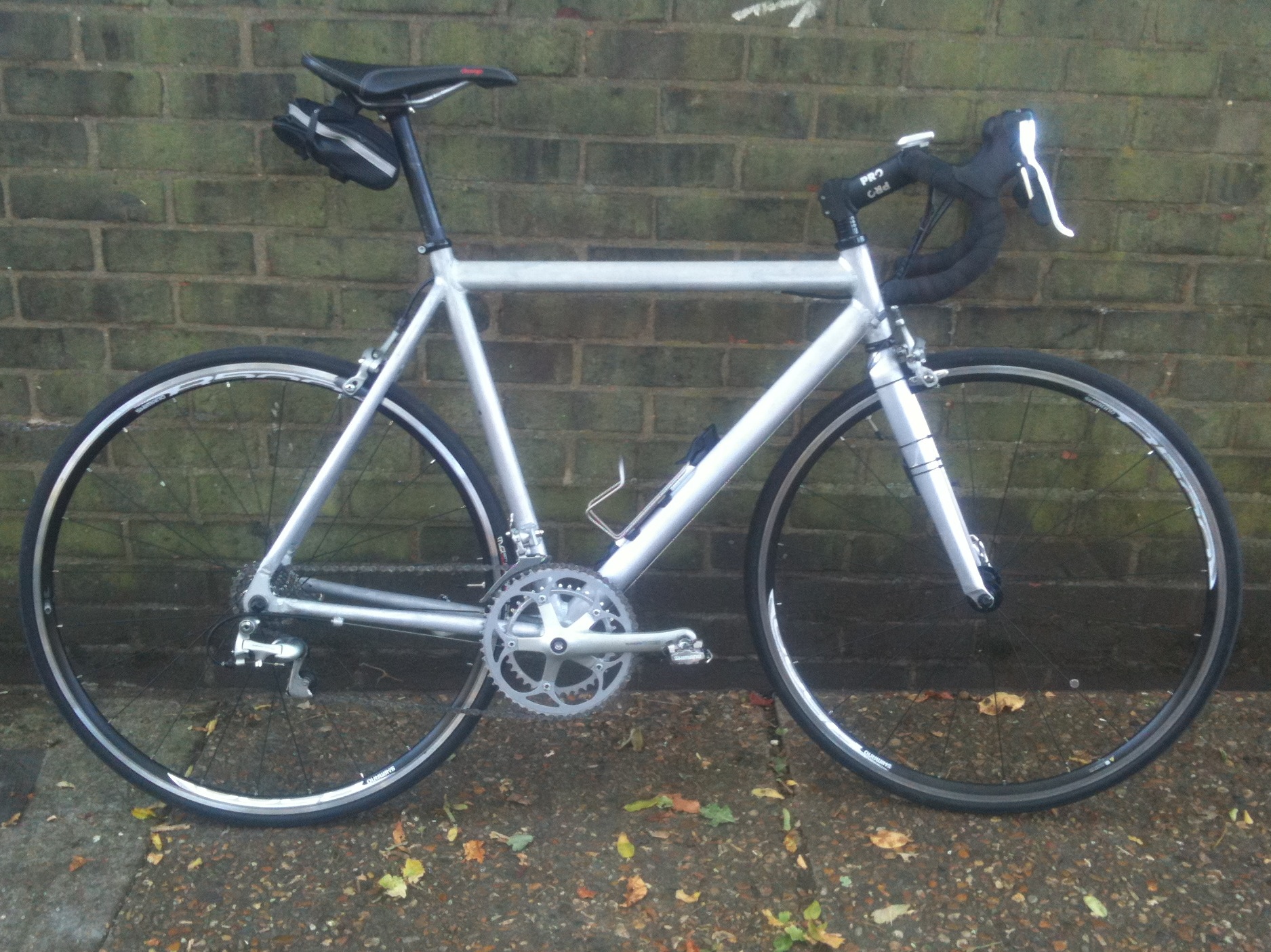
14. Corvino Road bike. LFGSS frame and a load of parts. Stripped it to bare aluminium. (Was stolen at the same time as the Langster. Saw it being ridden in Greenwich Park and took it back. Mrs TJP rides it now)

photo

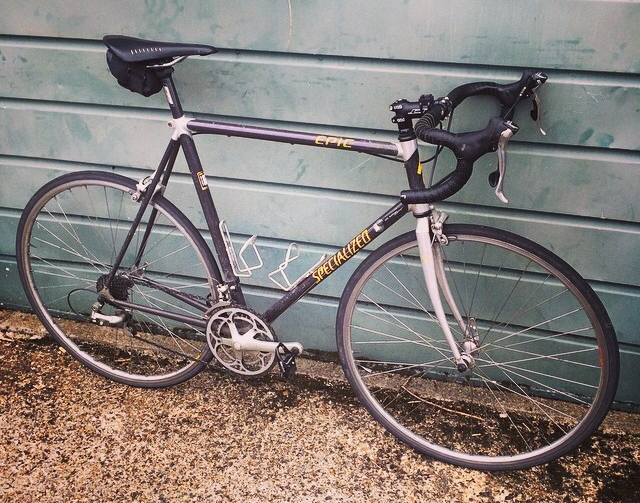
15. Specialized Epic Pro 1994 frame  Carbon Tubes, Alu Lugs – Lovely. (LFGSS – still got and cherish – especially now I’ve finally managed to sort out the knee pain it gave me on long rides)

Photo 27-09-2014 08 55 49

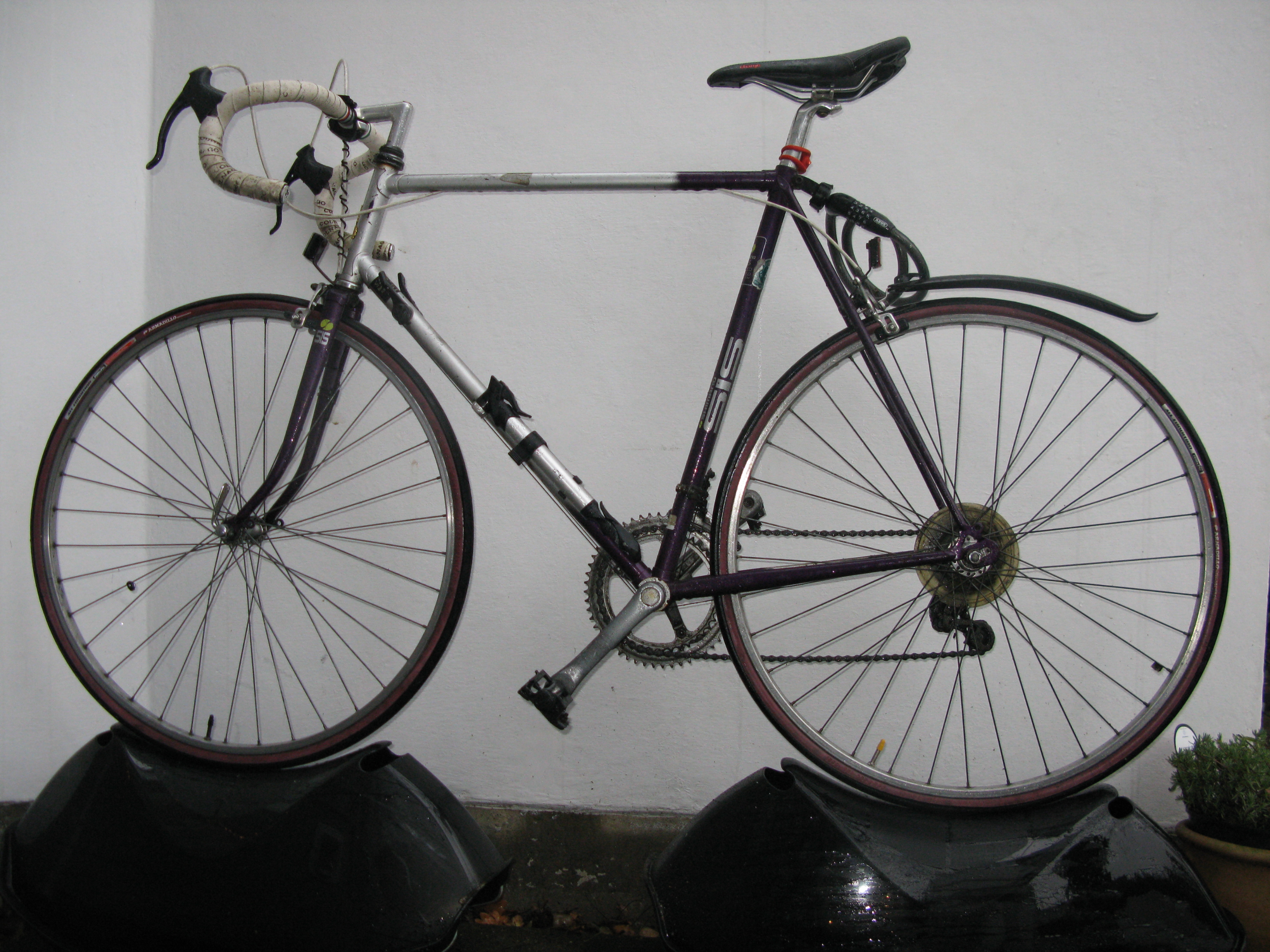
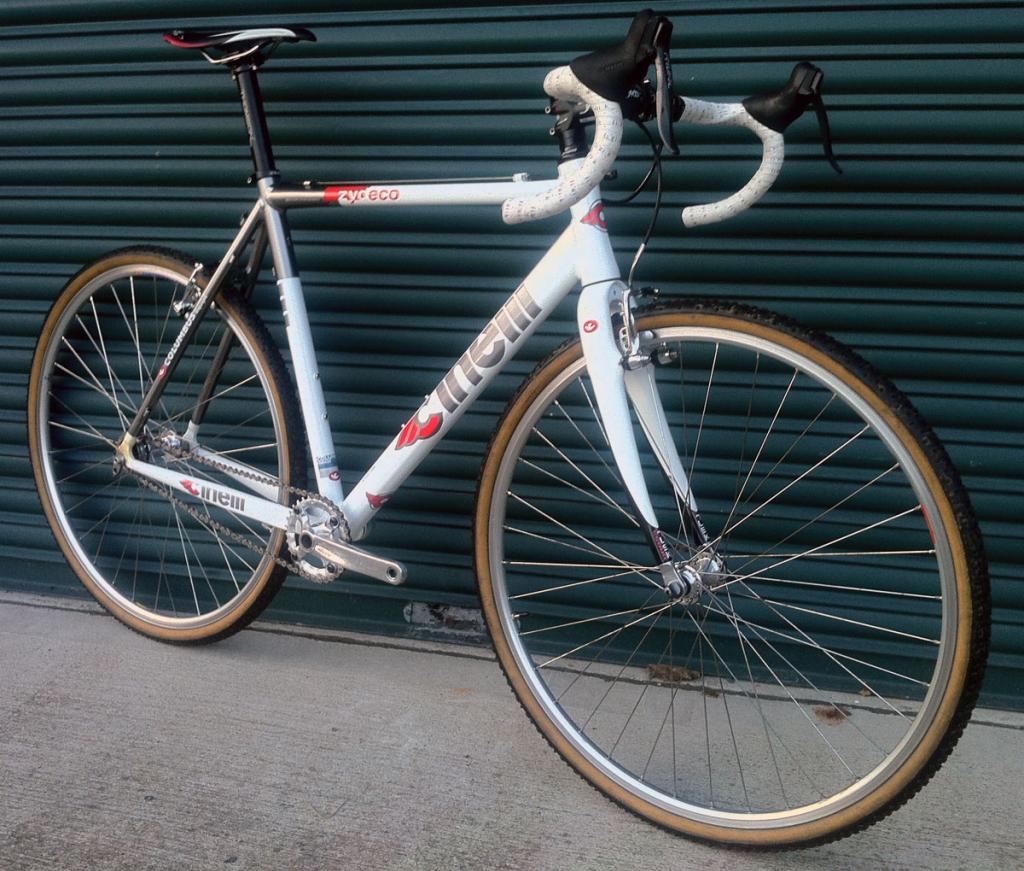
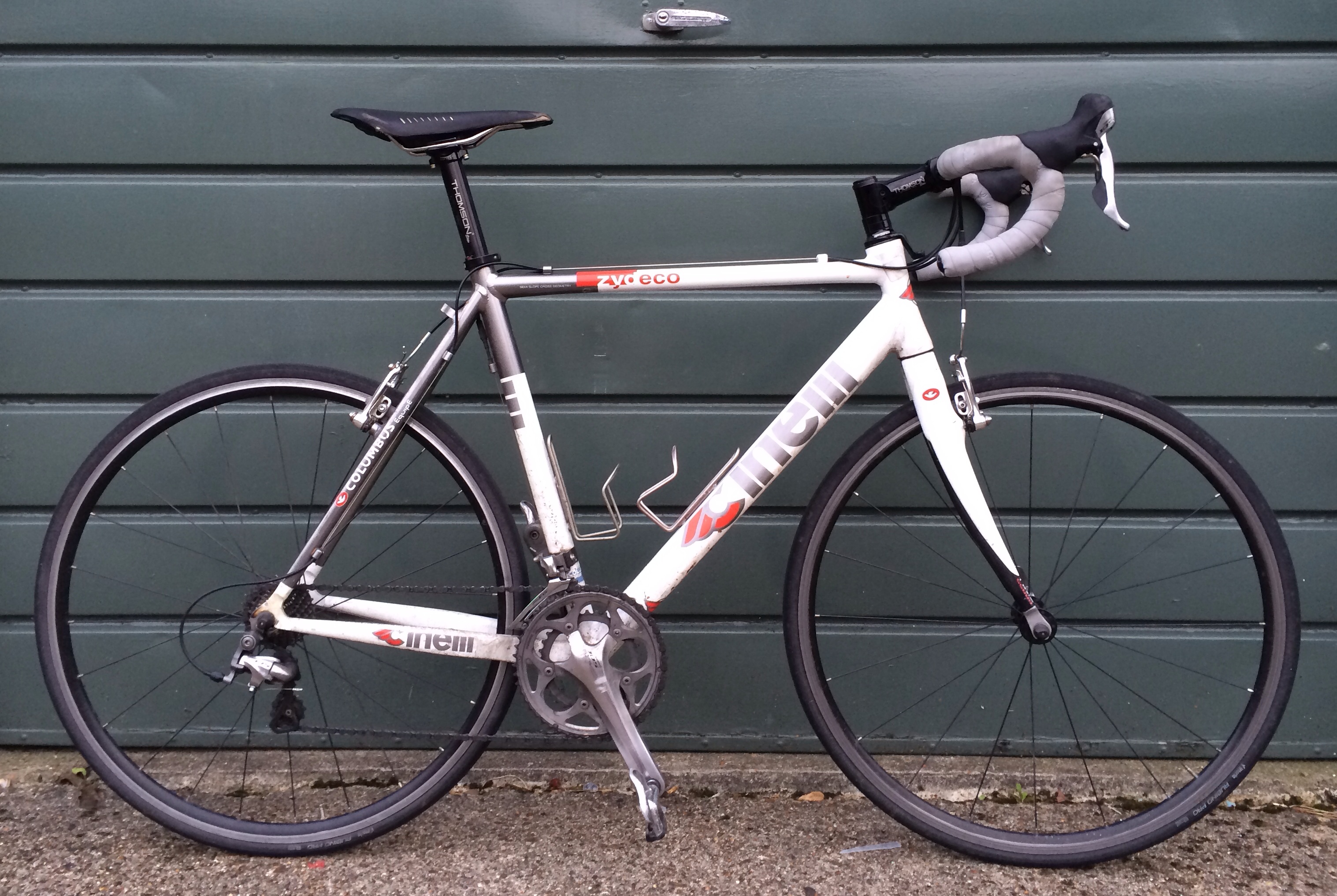
16. Cinelli Zydeco Cross frame . – Ride this every day, though I have put gears on it now. Entered my one race on this. 7th in the Rapha SuperCross Novice race 2012. (LFGSS – still got)

1-5

Photo 01-10-2014 18 14 09

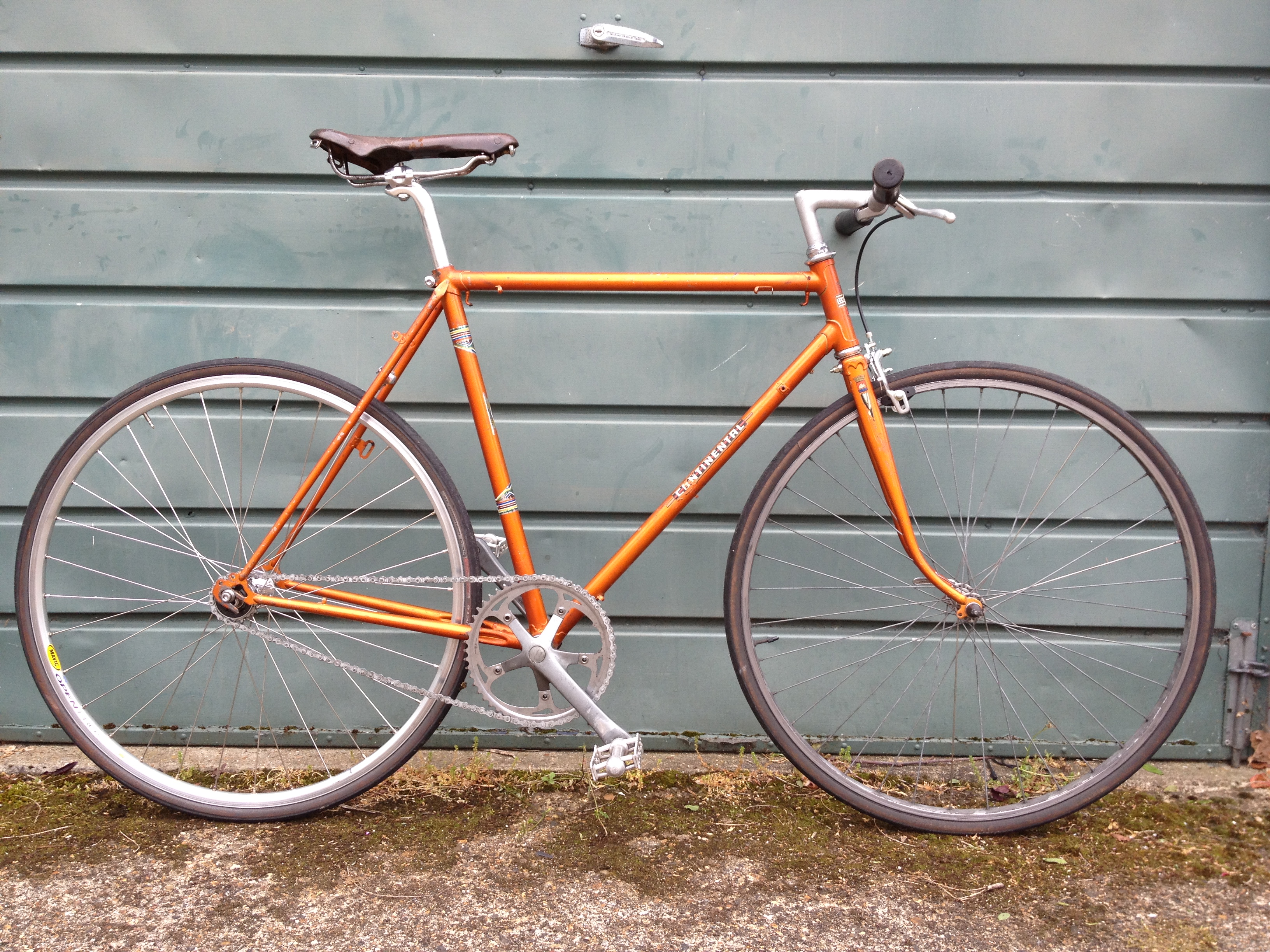
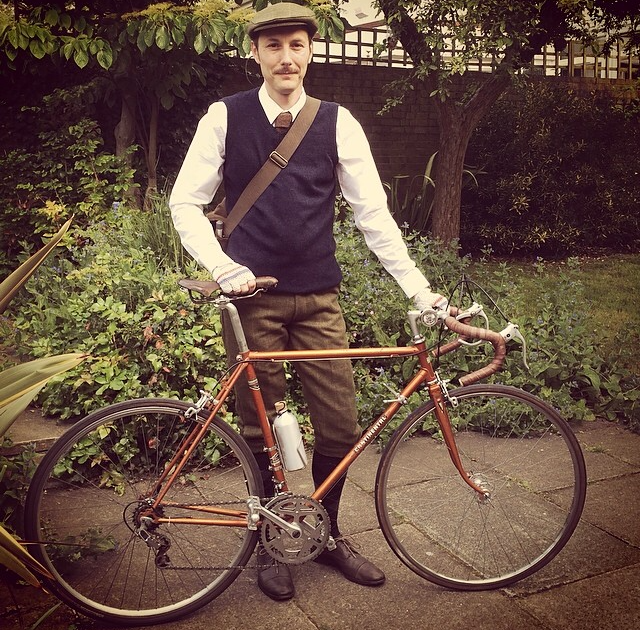
17. Continental 1970’s frame- single speed pub bike. (Ebay plus parts bin – Pub bike – still got).

null_zpsef5ee35b

UPDATE: this has now been redone for the Tweed Run and L’Eroica Britannia 2014.

Photo 27-09-2014 09 00 38

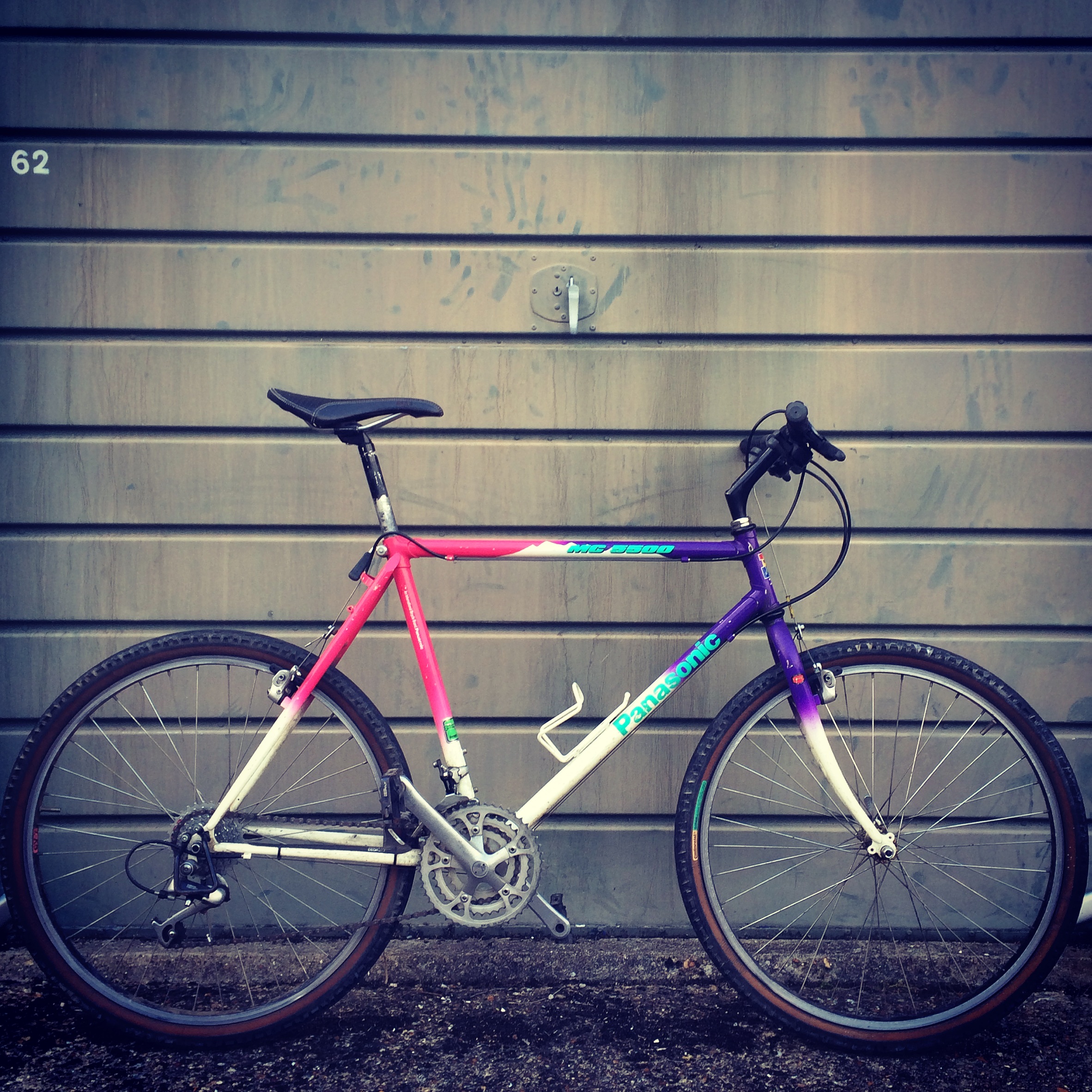
18. Panasonic 1990’s MTB – A departing neighbour gave me this recently. All steel, all original, all fun. (Given away in the Great Bike Clearance of 2017)

Photo 07-09-2014 18 10 47

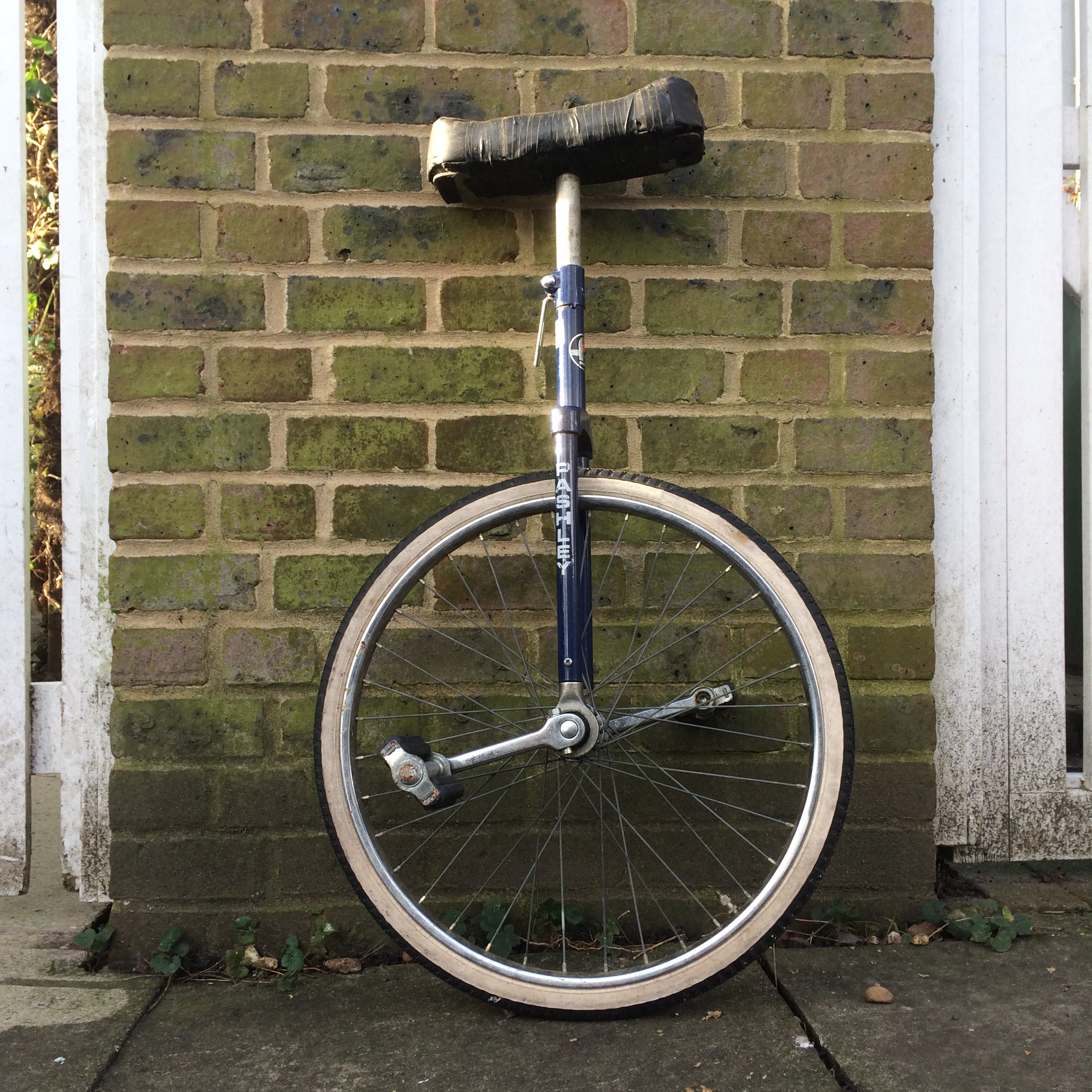
19. Pashley Unicycle. Bought  on a whim for £20. Haven’t even come close to mastering is yet.

Photo 17-01-2015 13 15 10

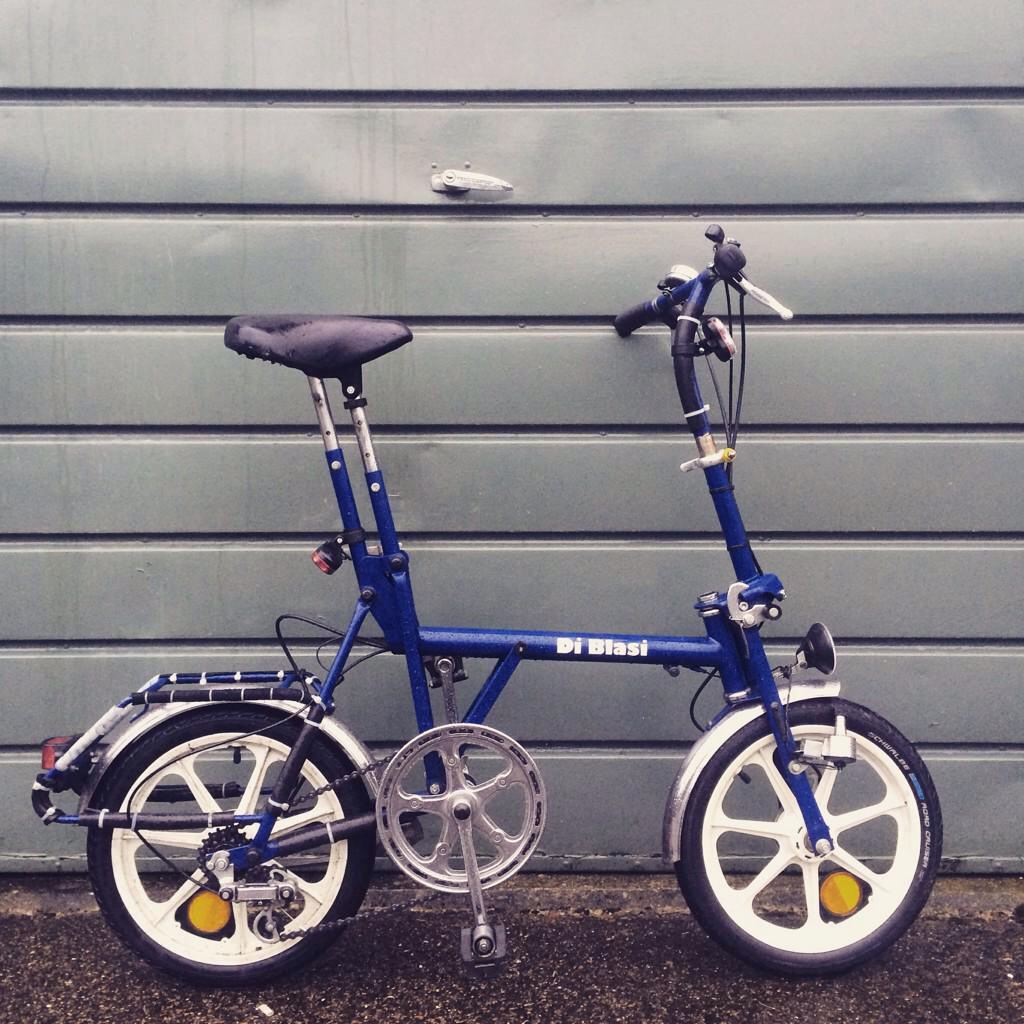
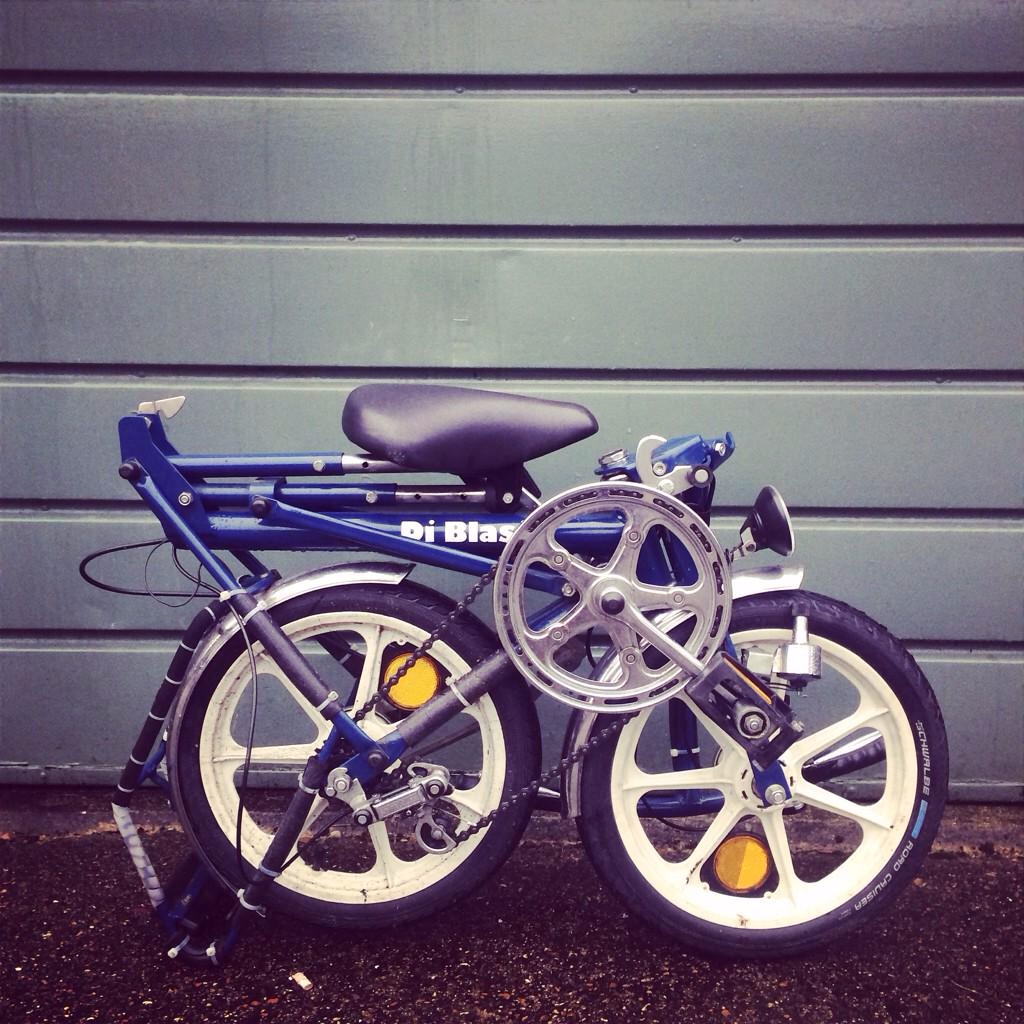
20. Di Blasi Folding Bike. Saw one of these super cute folders in a second hand shop for £250 and fell in love with it. Not at that price though – found this one on Ebay for an awful lot less.. Plus points: unfolds in less than 3 seconds. Minus points: Handlebars once decided to fold themselves when going to fast over a little speed bump in the road out side my house… The symmetry of this accident with that of the original red tricycle has only just occurred to me…

Photo 17-01-2015 13 11 12

Photo 17-01-2015 13 10 29

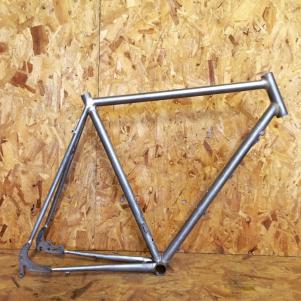
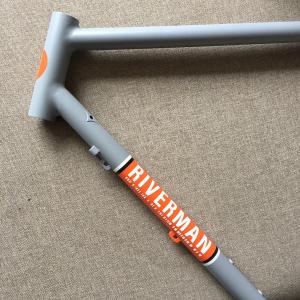
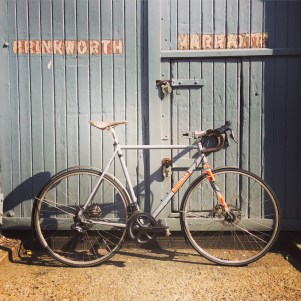
21. Riverman. As a treat to myself for my 40th birthday I went on a frame-building course with Mark Reilly. I wanted to build something that had all the things that I didn’t have; robust steel tourer with disc-brakes that could be fitted with either mechanical or Di2..

I’d never held a brazing torch before so I was pretty chuffed with the result. A pair of Death Spray Custom forks completed an otherwise low-key paint job. The name “Riverman” comes from the Nick Drake record.

You can read more about the Riverman build here

eb021e3d04f184894a6d314aedfe7fafee6a6274.JPG

c121a67cf2680f11ea559c77bac42d08e05d25e0.jpg

IMG_4279

Bonne Anniversaire – Robert Millar

Happy Birthday Robert Millar
TdF King of the Mountains 1984

20130912-164828.jpg


Until the arrival of Sky, Wiggins and Froome, Robert Millar’s 1984 King of the Mountains title and 4th place overall was Britain’s best Tour de France finish. Cruelly robbed of a win in the 1985 Vuelta and often over-raced by his teams, Millar never flew so high again.

An enigmatic character on and off the bike Millar ploughed a lonely furrow through his early life and disappeared into relative obscurity once his career ended, prompting a book by Richard Moore to go “In Search Of Rober Millar”. He now writes a column for cycling news and is seen at occasional events.

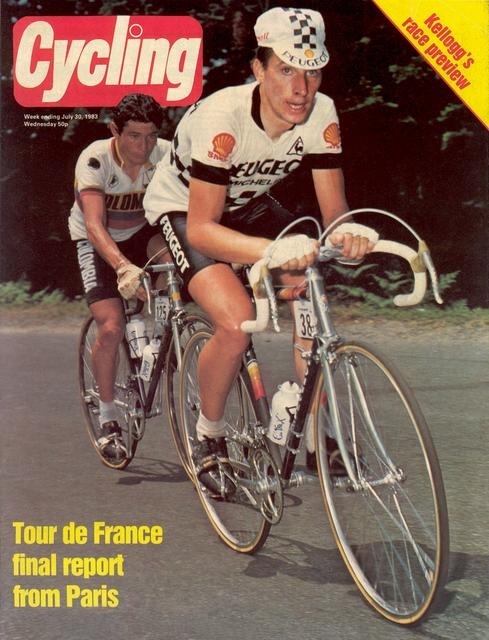
In honour of his birthday I’ll be riding in full Peugeot kit today.

La Vuelta 2014 – The Rest Day Round-up. #2

Apologies for lack of pictures this week but I’m writing this on the road (rail actually). Will add some later.

For a week which included what is being widely touted at the “Most Boring Grand Tour Stage in the History of the World. Ever”, we’ve actually been treated to a hugely enjoyable set of races in the last seven days. We’ve had high’s, lows, slows and blows as the race has taken a more solid formation ahead of the final week.

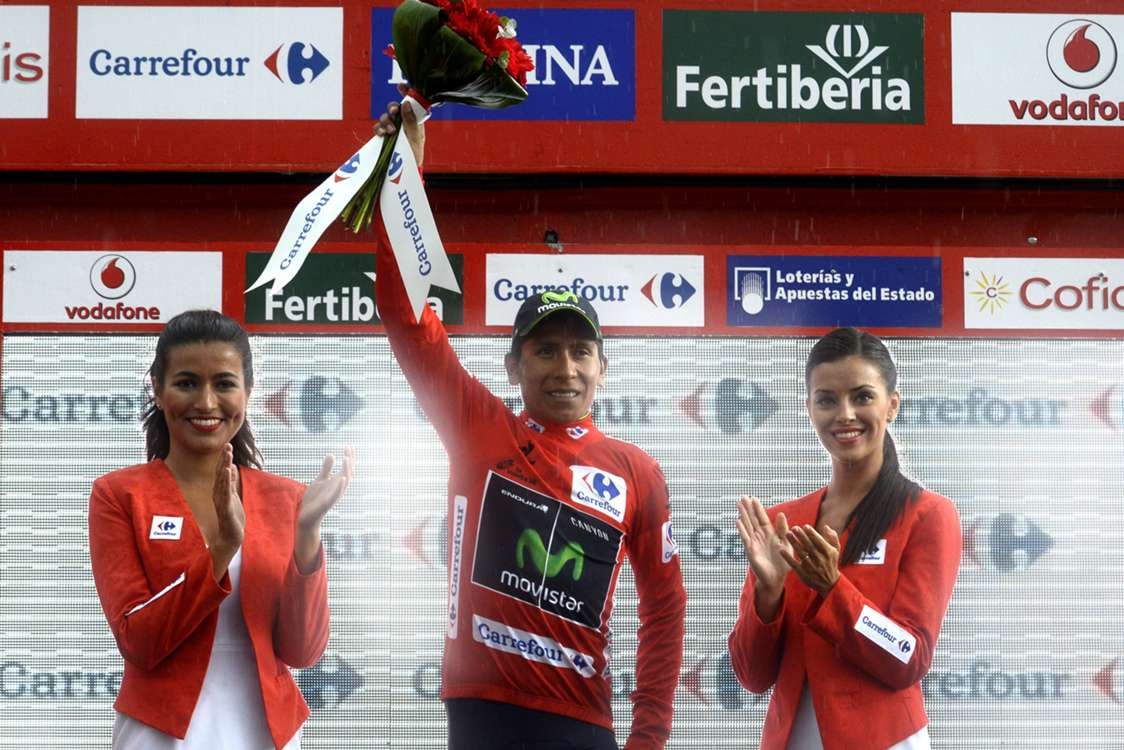
First up was the ‘up and down’ Individual Time Trial that saw race leader Nairo Quintana crash in spectacular fashion. After cresting the mid-point climb he began adjusting his rather unique, shin height overshoes as he picked up speed on the downhill. Whether it was taking his eyes off the road for a moment is uncertain but he took the wrong line into a corner and a worse one out of it and met the roadside barrier with sickening force. The cameras initially picked him lying flat on his back and the thought was his race was over. He managed to get up and finish some three minutes down and, though I had said that the Vuelta would not end in smiles for one of Quintana and Valverde, this was not what I had envisaged. Worse was to come though for the Giro champion the following day when he would be involved in an early mid-peloton tumble and suffer a similar fate to Froome and Contador did in the Tour. He climbed into an ambulance and was spirited away for an operation on a broken shoulder.

The expected TT charge by Chris Froome failed to materialise, lending more weight to the theory that he is not riding at 100%, with the Team Sky leader coming home way down in 11th place, beaten by people including his team mate Vasily Kiryienka. Tony Martin (OPQS) won of course but a great ride by Alberto Contador put him into the race lead and a surprising second overall for Rigoberto Uran (OPQS) suggested that he would be a force to be reckoned with as the race headed towards the mountains of the North.

The Stage 11 summit finish was won by Italian youngster Fabian Aru (AST) but the real talking point was what had gone on behind the main bunch of GC contenders rather than off the front. TeamSky had approached the final climb with their standard operating procedure of high tempo, massed ranks pulling hard. Only difference today was that Froome was off the back and apparently falling away. As the gap increased it became apparent that, unable to follow the initial attacks, he was riding his own race and hoping that an even tempo would get him to the top in roughly the same time. Time and time again he slowly reeled the leaders in, only to be distanced again. With what looked like a race-defining effort he caught them once more and finished alongside them.

Then we had the aforementioned stage from hell. A purgatorius eight-lap circumnavigation of a town called Logorno. It wasn’t so much a case that John Degenkolb (GIA) won but that everyone else, including the viewers, lost..

The following day the Vuelta organisers took everyone to the zoo – presumably to make amends for the boring city tour of the day before. I’m surprised that the riders weren’t given an ice-cream each as well to appease them a little more. With a sharp climb right at the end of the stage, which finished in a nature reserve complete with elephants and (hopefully caged) lions and tigers and bears, it looked like the kind of profile that would suit Dan Martin or Alejandro Valverde. Valverde did manage fourth on the stage and Martin ninth with the same time but Spaniard Daniel Navarro, riding for the French Cofidis team took the win with a well timed attack. Most of the GC contenders had held station, knowing that there were tougher days coming ahead. Three massive mountain days beckoned and the stunning Asturian outcrops provided the rocky background against which the riders would have to smash themselves.

Stage 14 to Le Camperona saw a repeat of the Chris Froome tempo show. Again he was left, apparently for dead, on the lower reaches of the incredibly steep Vallee de Sabeo climb and again he arose, Lazarus-like, to come back to the fore in the latter stages. Indeed he broke away in the final metres to eek a few seconds over Contador, Valverde and Rodriguez, who were all consolidating their top four places. Froome had been moving up place by place and now lay third as Uran shipped time on the first of a number of bad days. Ryder Hesjedal (GRS) won the stage from the break, either heartbreakingly overtaking Oliver Zaugg (TKS) just 100m from the line, or expertly judging his effort depending on your point of view.

By now it was clear that Froome’s antics were a pre-defined tactic; designed to limit his underprepared body from debilitating effort and to allow him to race himself into fitness and form whilst maintaining a strong GC position. The tactic was again on show in the second of the three mountain stages of this middle week, though with slightly less success than the days before, Again he hung back as Contador, Valverde and Rodriguez forged ahead and again he came back to them in the final kilometre of the famed Covadonga climb. Contador had repeatedly looked back for him throughout the climb, using every switchback to measure the distance between himself and the dogged Team SKy rider, making it obvious he views Froome as his main rival and threat. But this time the three Spaniards had the measure of the Briton and a Valverde attack a couple of hundred metres from the line – after he had contributed his usual little to the pacemaking – won him 5 seconds over Contador and a second place bonus whilst it cost Froome 7 seconds over the race leader when he couldn’t match the finishing pace. Przemyslaw Niemiec (LAM) just held out for the win, giving Lampre a second stage win of the Vuelta.

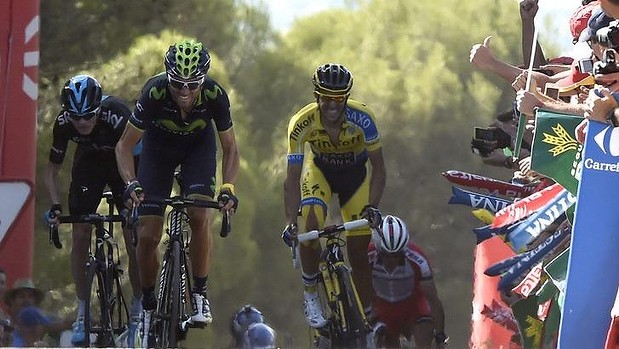
And so dawned the Queen Stage. Contador leading Valverde by 31seconds, and both Froome and Rodriguez by 1:20. The race winner would certainly now come form these four men and probably the podium too. Aru lay a distant 5th at 2.22.. I had thought that this would be the day for Froome to attack the Possum/Phoenix tactics of the week were becoming played out and his strength and confidence were visibly growing. Pundits were noting that there seemed to be no love lost between the three Spaniards and that there was none of the collusion that the race has seen in the past. With four Cat 1 climbs (including the summit finish) and a Cat 2 in a short 150km stage it seemed certain that the pattern would have to change. Again Team Sky drilled to the front on the approach but this time Froome was firmly in position and attacked a good 5km out. Only Contador could go with him and the pair raced up the climb, quickly mopping up the breakaway riders and look to contest the stage win. Contador never looked in trouble but the question remained whether Froome would have a second kick. When Contador attacked in the final kilometre it was obvious that the answer was no but he stayed well clear of the chasers to end within three seconds of Valverde’s second place.

We’ve seen a different side of Chris Froome this week. We should know that he is a fighter, a sufferer, a grinder when it is needed. He has not really had the chance to show it to date. If he wins this Vuelta – and I’m afraid I don’t think he can overcome Contador from here – it could just stand the test of time to be his greatest of his career.

In other Vuelta news we had worrying reports and sights of riders plunging over the edges of steep descents. Whilst Quintana luckily managed to stay on the Tarmac side during his acrobatic brush with barrier, Garmin’s Dan Martin and Movistar’s Jose Herrada both had to extricate themselves from the trees during treacherous descents. Both were able to continue with Martin coming in not far off the leaders. Not so Uran, who completed a miserable post TT week with a 15minute plus deficit on Stage 16 alone.

Not able to complete Stage 16 were Tinkoff’s Ivan Rovny and OPQS’s Gianluca Brambilla who brushed with each other on stage 16. The pair exchanged blows during the latter stages and as Brambilla went ahead in the break he was summarily ejected from the race by the commissars who, in the certainty that they would have done so after the stage, were worried that he would have a major bearing on the days outcome. Rovny was then subjected to the same public ejection in order to balance the books.

Fighting in the peloton has a long and varied history – we saw some quality ‘handbags’ earlier in the year and there was a bit and to and fro between Niki Terpstra and Maarten Wynants in the Eneco Tour – but it is usually confined to a bit of elbowing/head butting/bottle throwing by the more het up of the sprinters. Hearing the following day Phillip Deignan accuse Joaquin Rodriguez of a similar full faced punch is worrying. As yet no action has been taken against the Spaniard who seems to have escaped by dint of being not caught on camera.

The final week lies now lies ahead of us with a massive pair of cycling shoes to fill. It’s not in Froome’s nature to settle for second – we know that all too well – but can he really take the fight to Contador and give us that dream showpiece – the final day Time Trial upset – that we foresaw before the race began??


GC Standings:
  • 1 CONTADOR, Alberto (TINKOFF-SAXO) 63:25:00
  • 2 VALVERDE, Alejandro (MOVISTAR) + 1.36
  • 3 FROOME, Chris (SKY) + 1.39
  • 4 RODRIGUEZ, Joaquin (KATUSHA) + 2.29
  • 5 ARU, Fabio (ASTANA) + 3.38
  • 6 MARTIN, Dan (Garmin Sharp) +6.17
  • 7 GESINK, Robert (BELKIN) + 6.43
  • 8 SANCHEZ, Samuel (BMC) +6.55
  • 9 BARGUIL, Warren (GIANT-SHIMANO) + 8.37
  • 10 CARUSO, Damiano (Cannondale) +9.10
 

La Vuelta 2014 – The Rest Day Round-up. #1

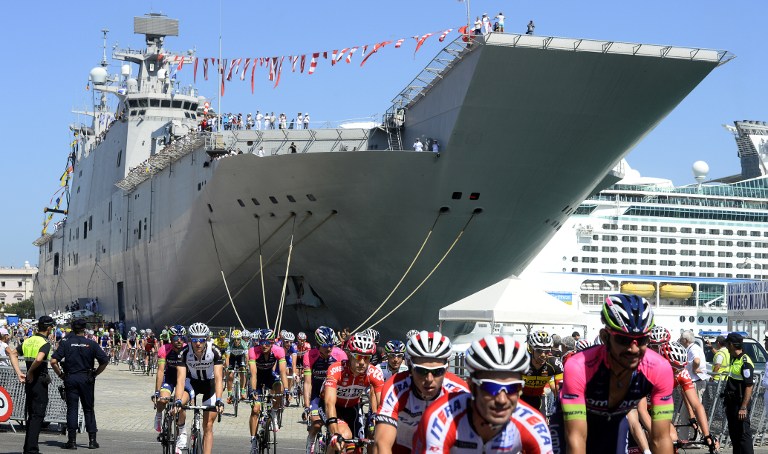
The 2014 Vuelta could have got off to a real ‘flying start’ if the organisers had had the sense to switch the Prologue Team Time Trial with the showpiece Stage 3 beginning – which took place on the deck of the Spanish aircraft carrier LHD ‘Juan Carlos I’. Despite this obviously missed opportunity the Grand Tour’s take-off salvo was reasonably impressive none-the-less as local lads Movistar jetted across the 12.6km course in the best time and Cannondale upset the expected order by coming in second ahead of more favoured teams such as Orica-Greenedge and Team Sky, who suffered yet another ignominous day in the saddle to only manage 11th.

-Stage 3’s village départ was fairly spectacular.

 
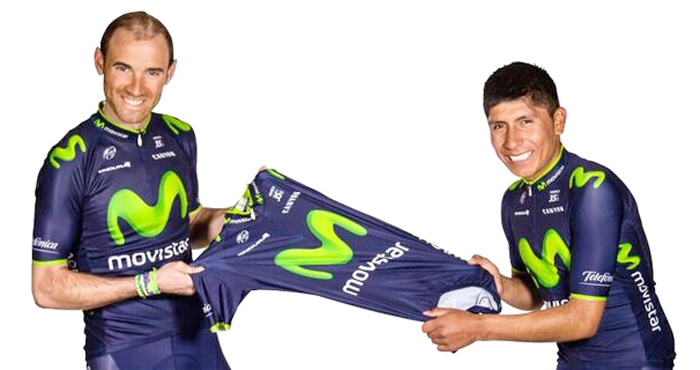
The Movistar team looked united throughout with Alejandro Valverde and Nairo Quintana both coming across the line in the time-setting group. It fell to Jonathan Castroviejo to claim the first leaders’ jersey though as he led the seven intact riders home. Judging by what we have seen since, this might have been the first and last show of unity within the team. Valverde got on the wrong side of a seven second split on the aforementioned Stage 3 and since then he has appeared to be looking to initially regain parity with his younger team mate and then push on beyond him.. It’s unlikely to be the spectacular enmity of the 1986 Tour all over again but it will be interesting to see if he commits to supporting Quintana or just doing his own thing. On Stage 4 he attacked on the final downhill and, though only ever gaining a maximum 14 second gap, forced teams to chase him. Tellingly, Quintana brought the rest of the team to help the chase. It was becoming apparent that nothing in this Vuelta was going to be straightforward.
 
Before those fireworks in the GC battle got started, the sprinters in the race had a couple of days in the sun. And what sun! Temperatures soared as high as the bearded vultures of the Iberian peninsula and also looked to pick off any under-hydrated riders. Teams fought the conditions just as much as each other in the opening stages. Trek Factory Racing’s Fabian Cancellara shed 4kg on one stage alone and whose bronzed thighs must have been like well-roasted crackling by the days end with the combined effects of heat and salt from all the sweat. Nacer Bouhanni (FDJ) showed he thrives in the heat as he took the first sprint win with a strong finish but it was Valverde who ended the first open-racing day in red by dint of coming in ahead of Castroviejo. His podium appearance in the leader’s jersey may have set something off in his mind about ‘letting the road decide’ who was the Movistar team leader.
 
vale quin with smiles
I can’t see this Vuelta ending in smiles for both Valverde and Quintana
 
Alejandro is another who is said to thrive in hot conditions but he couldn’t repeat the trick the following day when, on a finish that looked well suited to his old Liege-Bastogne-Liege winning skills, he got caught in that split which cost him seven seconds. Michael Matthews (OGE) showed great strength and even greater timing to overhaul another favourite for the day Dan Martin (GRS) to sneak the win and, thanks to those time bonuses, the leader’s jersey as well. Matthews is becoming something of a first week leaders jersey specialist having worn pink for six days in May during the Giro and now holding onto red for three days in Spain. Giant-Shimano took the stage win reins next as they looked to remind the cycling world that they don’t necessarily need Marcel Kittel to win Grand Tour sprints. Kittel’s fellow German John Degenkolb took two wins on the bounce to first challenge and then overtake Matthews in the green jersey competition.
 
The usual hustle of the GC contenders to get to the front of the pack in order to avoid the chances of being held up in a crash at the end of each days racing provided some early indication about how much credence we should be giving to Alberto Contador’s words about only challenging in the final week. ‘Not much’ would seem be the answer as the Spaniard was well to the fore in every stage and marshalled his troops to ensure that he was always in contention. He looked far more competitive from the off than Quintana whose usual first week impression of an invisible man was particularly impressive this time around. So good in fact that when he had transponder issues on Stage 7 and didn’t show up in the final standings, the general consensus was that he had been dropped and lost a whole bunch of time. In fact he had finished 12th but no-one had noticed. Neat trick.
 
Chris Froome was having a more visible first week than the man who was being touted as his main rival for the overall. He too was often at the head of affairs and, after the disappointment of the TTT, Team Sky performed much more like we would expect them to. Having crashed (yet again) earlier in the day and had to chase back for 15km, Froome powered away in the final metres of that same Stage 7 finale to grab a couple of seconds back over the others but he and Valverde had done more damage the day before when they broke free from a stellar five strong group also containing Quintana, Contador and Joaquin Rodriguez (KAT) on the final metres of the 1st Cat Alto Cumbres Verdes to contest the victory. Valverde edged out the Briton, reclaimed the red jersey and leapfrogged Quintana on GC with same blow. It was a riveting finish to an intriguing stage but one which, in the end, asked more questions than it answered. What are Valverde’s intentions exactly? How bad was Contador’s Tour injury really? Will Froome fade and Quintana bloom towards the end of the race?
 
Valverde win
Froome, Valverde, Contador and Rodriguez made time on the Alto Cumbres Verdes
 
The answers were supposed to be put on ice for Stage 8 with a flat day that had ‘bunch sprint’ written all over it in store. But as we have seen before those pesky crosswinds put paid to the idea of a relatively calm approach to the line for the sprinters to frenetically contest. Echelons exploded across the peloton with around 15km to run and, although the first group initially contained all the favourites, Sky and Tinkoff-Saxo put the hammer down again and split the still large group again. This time Quintana was found wanting and it required the worried Giant-Shimano team, desperate to deliver Degenkolb back up to the front, to bring him back into contention. This time it was he, rather than Valverde, who was isolated and without the support of his team. Nacer Bouhanni won the ensuing sprint – albeit with an almighty wobble at the very end that seemed to put Matthews off his own effort and which divided the race jury 2-2 as to whether he should be punished for a irregularity. It was pretty ironic given that Bouhanni had made a great noise of complaining about Degenkolb’s line a couple of days earlier.
 
Someone making a conspicuous lack of noise has been Peter Sagan (CAN). Inevitably touted as a strong contender for the green jersey and with some early stage profiles suiting his all-round explosive style, finding him languishing down in 25th with only 17 points by Saturday (Degenkolb led with 87 at that stage) would prove a mystery to most onlookers. ‘Slightly overweight and ‘totally uninterested’ has been the professional pundits’ verdict; the cause of which has been assumed to be mainly his now-confirmed switch to Tinkoff for next season. Perhaps he is acting ‘honourably’ by not wanting to earn any more World Tour points this season as they will only benefit his new team. Or perhaps he just can’t be arsed.
 
The Stage 9 showdown – ahead of the rest day and the first individual time trial – proved to be as thrilling a finish as Stage 6. With a large break ahead for most of the rain-sodden day, the selection process on the approach to and up the final climb of Aramòn Valdelinares played out in two places almost simultaneously. As the magnificently monikered Lampre-Merida rider Winner Anacona struck out from the disintegrated break in an attempt to snatch the stage win from Bob Jungels (TFR) and then Javier Moreno (MOV) and the overall race lead with a bold solo ascent, Dan Martin was lighting the peloton’s touchpaper after more solid work from TeamSky to half the break’s advantage from over six minutes to hover around the point where Anacona – lying 2′ 50″ back at the start of the day – would take the red jersey. Martin could not make his attack stick but his initial foray goaded the others into action and when a visibly bouyant Contador shot past the Katusha riders who had ferried Rodriguez et al back up to Martin, few could follow. Valverde and Froome certainly could not bridge the gap and immediately went into damage limitation mode. Sky’s dominance of just a few minutes earlier when Kennaugh, Deignan, Nieve and Cataldo were all making good on the usual mammoth stint from Kiriyenka was washed away with the standing water coursing across the mountain road. As Quintana and Rodriguez battled their way back towards the dancing Contador the race for the GC lead was inexorably clawed away from Anacona, who had already crossed the line as stage winner, to whether Contador could hold off Quintana for the three seconds he would need to leapfrog him. As remnants of the break still staggered over the finish, the Colombian Giro d’Italia winner, aided by Rodriguez, caught Contador on the line to secure the same time and deny El Pistelero the leader’s jersey. Sadly in doing so he also denied a fair few cycling sub-editors the chance to dust off their ABBA puns and declare that “The Winner Takes It All”.
 
quintana red
But it was Quintana who finished the first week in the leader’s red jersey
 
Froome and Valverde toiled in a further 23 seconds back with both trying to sound positive afterwards. Froome looked towards Tuesday’s 36.5km trial trial as a place to recover his 28 second deficit time whilst Valverde – though acknowledging it was good that the lead had stayed within the team – still only trailed by eight seconds and made statements about the road deciding who will lead “Team” Movistar. With the top six within 30 seconds of each other and five summit finishes included in the next block of racing after the time trial we really do seem set for the ding-dong battle that we have all been wishing for.. This ‘Spanish Feast’ does keep on delivering.
 
GC Standings:
  • 1 QUINTANA, Nairo (MOVISTAR) 35:58:05
  • 2 CONTADOR, Alberto (TINKOFF-SAXO) + 3
  • 3 VALVERDE, Alejandro (MOVISTAR) + 8
  • 4 ANACONA, Winner (LAMPRE – MERIDA) + 9
  • 5 FROOME, Chris (SKY) + 28
  • 6 RODRIGUEZ, Joaquin (KATUSHA) + 30
  • 7 ARU, Fabio (ASTANA) + 1:06
  • 8 GESINK, Robert (BELKIN) + 1:19
  • 9 URAN, Rigoberto (OMEGA PHARMA – QUICK-STEP) + 1:26
  • 10 BARGUIL, Warren (GIANT-SHIMANO)