Giro d’Italia Preview – Whatever happened to all the heroes?

“Whatever happened to all the heroes? All the Shakespeareos?” –  The Stranglers: No More Heroes

With the Giro d’Italia starting in Belfast on Friday, and the inaugural Women’s Tour of Britain breaking new ground in England this week, there are probably more top-level cyclists currently on UK soil than for many, many a year. But whilst the Women’s Tour has attracted the crème de la crème of female riders, this edition of the Giro has been dogged by some big name stay-aways who are preferring to focus on the Tour de France later in the Summer.

giro-d-italia

If this is your first time watching the Giro check out the Beginner’s Guide at the bottom of the page.

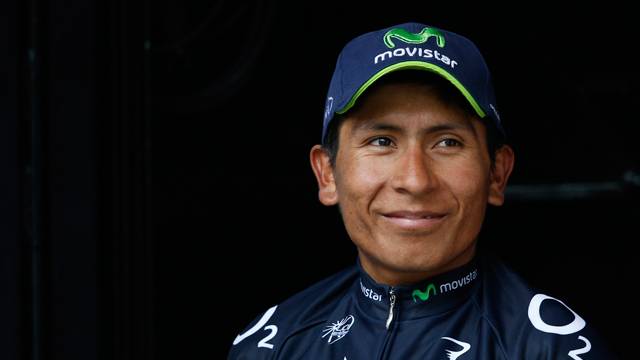
Defending champion Vincenzo Nibali’s decision to fight for Yellow rather than Pink has perhaps caused the biggest concern for the organisers and certainly for the homegrown fans. Italian cycling is suffering from a cyclical downturn and true contenders appear very thin on the ground despite their country-men making up more than a third of the 198 entrants. Previous winners Damiano Cunego, Michele Scarponi and Ivan Basso are riding (as is 2012 winner Ryder Hesjedal) but none have shown the form that would put them into consideration for the top prize. Elsewhere, Joaquin ‘Purito’ Rodriguez, a seemingly resurgent Cadel Evans and 2013 Tour de France runner up Nairo (Nero for this race, surely??) Quintana do bring undoubted quality but there remains a feeling that this is very much a sideshow filled with men who are either deemed too old for a Tour win, or still too young. Quintana, with an occasionally 50-year-old looking face on his 24 year old body, sits in both camps.

quintana

Quintana: the favourite is an old head & young shoulders above the rest.

Injury and accident have also robbed the start list of a couple of key battles. Richie Porte’s early season illness has pushed his goals backwards, meaning we miss out on a potential repeat of a high-level Sky vs Movistar battle that illuminated last years Tour and which had been widely expected. After Wiggins’ disastrous appearance in Italy last year (and Sky’s courting of the American market in the overlapping Tour of California this year) it’s been left to local boy Dario Cataldo to carry the hopes of Sky for this Grand Tour instead. Chris Horner’s incident with a car during recent training has also removed his name from the start list and with it the intriguing prospect of him going head-to-head on the mountains with Quintana whose age is his own digits swapped around.

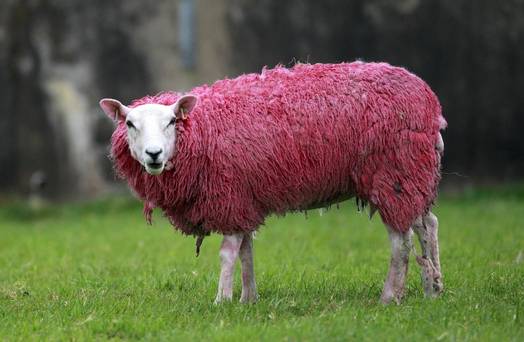
Visa issues have also blighted the build-up to Belfast’s Grande Partenza. A number of riders have apparently either been denied visas by the UK authorities or simply not received them (and their all important passports) back in time. Cue further last-minute roster re-shuffling. That aside, preparations for the big roll-out in Ireland seems to have captured the enthusiastic spirit that the country is famous for. The Emerald Isle has been turned totally pink – literally in some cases – with fuchsia sheep, rose horses, coral cranes and even the odd mauve mayor popping up the celebrate the coming of the Giro. 1987 winner Stephen Roche has been roped in as the de facto ambassador for the first three days and, with his son Nicholas leading the Tinkoff-Saxobank team and his nephew, Dan Martin of Garmin-Sharp in the hunt for stage wins, he will be hoping to continue celebrating long after the Giro caravan has moved on.

pink sheep

There will be lots of pink wool to be had in Ireland’s Autumn/Winter fashions.

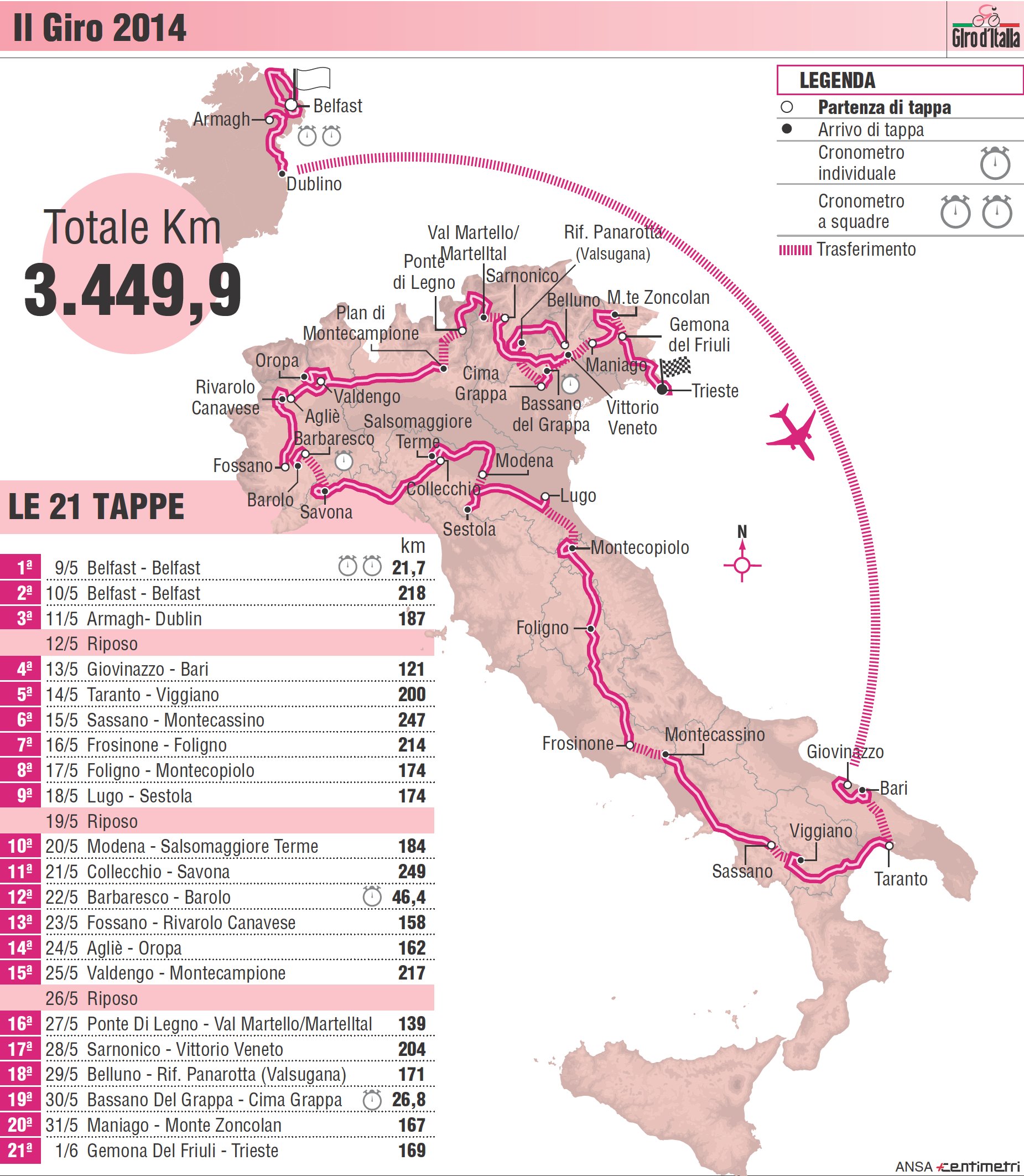
And move on they must; for after starting from the Titanic museum near Belfast’s famous shipyards and winding their way through North and South en-route to Dublin, the whole entourage faces a long transfer to Southern Italy before beginning the stages ‘up the boot’ towards the Alps and the Dolomites. This year’s finish will be in Trieste on June 1st but there is a whole heap of climbing to be done before the riders reach the final port. And that brings us back to Quintana.

With a favourable course than includes monstrous ascents of the Gavia & Stelvio on Stage 16, a mountain time-trial up the Monte Grappa on Stage 19 and then a penultimate day which ends with the eye-watering ramps of the Zoncolan, the tiny Colombian climber looks set to thrive. Quintana has been given the lead role of a strong team under the pretext of Movistar preferring to develop him in the less pressured environment of the Giro. With the relatively depleted start list though, this plan could backfire as Quintana is now such a hot favourite (10-11 ON at the time of writing) that anything less than the win will be seen as a sure thing thrown away. With such high expectations, and without another potential leader within the team to deflect attention, all the pressure will actually be fully on him from the outset. One hopes that his attacking style is not overly curtailed by the burden of favouritism.

GIRO D'ITALIA 2014

If Quintana can’t land the Giro in a suitably swashbucklingly way I suspect that most neutrals will be hoping that the ever-popular Purito finally lands a Grand Tour. Whatever happens, we don’t want a defensive phoney war through the mountains with one explosive attack on the last 100m of the Zoncolan any more than we did the dull time-trialled victories of Indurain. More than any other Grand Tour, the Giro sets itself up to be about spectacle. Let’s hope it delivers. Forza!

—–

Beginner’s Guide to the Giro

21 stages, 3 rest days (Mondays), 3,449.9 kilometres.

Key stages: 16 (Tuesday 27th), 19 (Friday 30th), 20 (Saturday 31st)

TdF/Giro Differences: Yellow is Pink, Green is Red, Polka Dots are solid blue, White is still white.

Grand Depart = Grande Partenza, Domestique = GregarioMaillot Jaune = Maglia Rosa

Froome is Porte, Kennaugh, Cataldo. Cav is Swift. Kittel is still Kittel.

Methods in the Madness – Spring Classics Round-Up

“This be madness, yet there is method in it” – Hamlet
 
And we are done. Bergs have been beaten, cobbles have been conquered, pavé passed and Murs mauled. The Spring Classics season is over and there is a small chance to draw breath and reflect on the tumultuousness before the Grand Tour season comes to rule our lives once more.
 
It has been an undeniably classic Classic season. Most recent past campaigns have been over-shadowed by the savagery of the weather or the apparent dominance of one particular contender. But this season the weather has been relatively benign and the racing wide open. It’s made for a series of great spectacle and no little drama.
 
Drama is, of course, the key element of the Classics. Reduced to a single day, all the action is laid out before us in one go and unfolds like a hard-hitting play rather than an extended mini-series. Unlike stage races, where sub-plots and tangents are explored alongside the main narrative, one-day racing is direct, daring and usually brutal in it’s single-minded adherence to a primary theme.
 
As with all reductive acting, baring your soul, hitting your marks and displaying exquisite timing become ever more important. With nothing to save yourself for the following day, everything can be left on the stage today. This should mean that the Spring Classics are characterised by bold, ‘balls-out’ races where those who are prepared to risk everything at the defining moment will most often be rewarded. Method acting – total immersion in the role – is the only way to win.
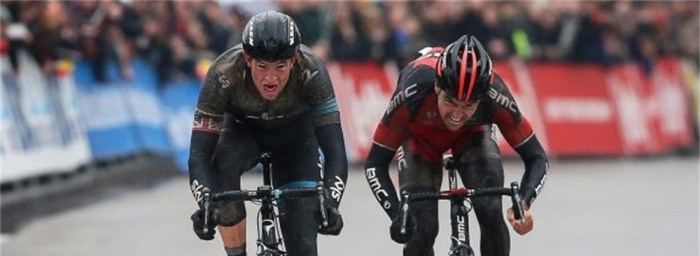
 
het nieuwsblad
 
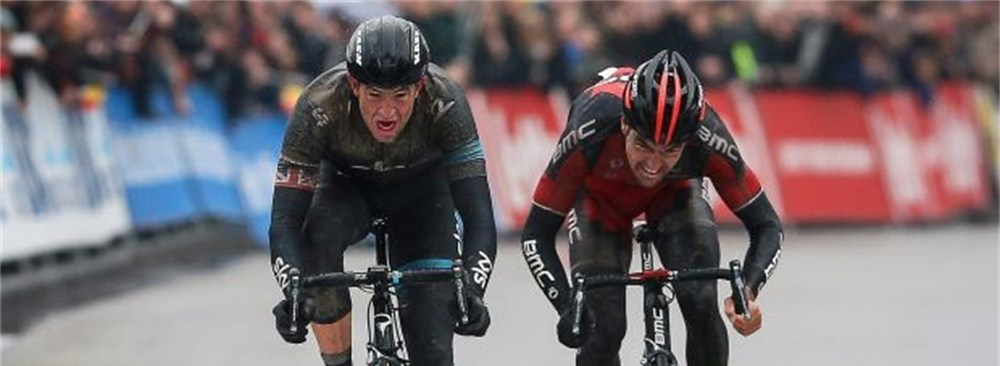
‘Immersion’ was the key theme in the sodden fields of Northern Europe where the season’s first hero emerged from the deluge at Omloop Het Niewsblad. Like a Shakespearean yeoman of old, Ian Stannard wore down the opposition in filthy conditions and lion-hearted a win over much favoured opposition. Grim-faced in victory, the toll of the day’s efforts was so thoroughly etched on his face that he could barely manage his victory soliloquy after his giving everything in the final act of a day that set the precedent for the nerve-jangling racing that came in the following weeks.
 
The following day, Kurne-Bruxelles-Kurne – totally abandoned in 2013 due to snow and ice – was completely dominated by the OPQS classics team who briefly threatened to sweep all before them. Tom Boonen laid down a marker to the other big guns that would long linger in the minds as the Classics progressed. He was back on his favoured stage, with good form and great support.
 
Strade Bianche
 
 
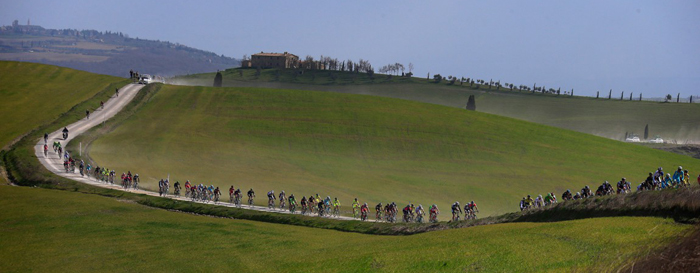
Attention lingered in Italy a while longer for the first Monument of 2014, Milan-San Remo, La Primavera. The script changed, changed and changed again in the weeks leading up to the longest single-day race on the World Tour calendar and, as climbs were omitted, reinstated and then omitted again, sprinters – expecting to be understudies at most – were suddenly scrambling to speed-learn re-written lines as they were thrust into the limelight much earlier than expected.
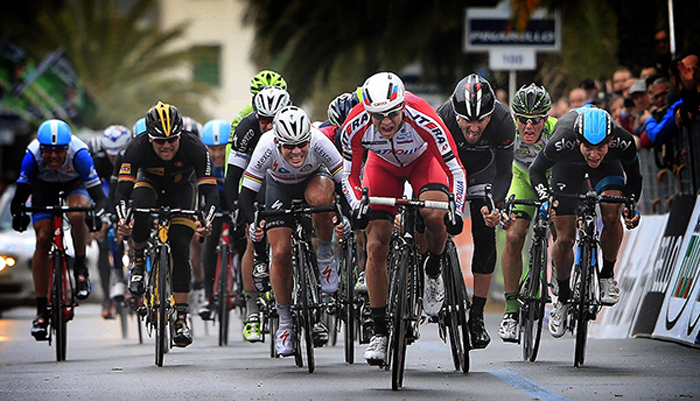
 
milan sanremo kristoff
 
The omission of Le Manie and then also of the additional Pompeiana was meant to make the race a sprinter’s delight and so it came to pass. But the ‘favourites’ – short on form and shorter on specific training for this race – were beaten by a less-fancied (but still well touted) rider. Sadly Boonen was missing due to a personal loss so it was left to Norway’s Alexander Kristoff, riding for the Katusha team, who was emphatic is the final yards denying Cancellara, Britain’s Ben Swift, and even Sagan, Ciolek and Cavendish. It was a performance that made a lot of people sit up and take note, particularly for the upcoming cobbled Classics.
 
My own personal highlight of the year was the frenetic E3-Harelbeke race in late March. It was no surprise to see OPQS duo Niki Terpstra and Stijn Vanderberg in the small group contesting the finish after a thrilling race of attack and counter attack. Nor was it a surprise to see Sagan beat both of them to the line despite being outnumbered. The surprise was that joining these three in the sprint was Sky’s Geraint Thomas, who capped off a storming race for Sky by beating the ponderous Vanderberg to take third place. It was a race you could not take your eyes off for a moment and if I only go back to watch one race this season, this is one I will pick.
 
In England April is synonymous with passing rain showers but in cycling it means cobbles – long periods of persistent cobbles. The Tour of Flanders and Paris-Roubaix; for many the painful apex of the Spring season. The Tour of Flanders was meant to be the Cancellara and Boonen showdown; the Oscar-tipped heavyweights facing off mano e mano. Sagan threatened to steal the show once more, as did Greg Van Avermaet (BMC), Sepp Van Marcke (Belkin) and Vanderberg once again but it was Cancellara who showed up exactly when it mattered; shattering the already select chasing group on the last ascent of the Oude Kwaremont to catch the leaders on the Paterburg. He then contrived to unsettle the group of four in the final run-in with a display of nonchalant gel-eating that was full of artful arrogance, before dispatching them in a late, late sprint. Kristoff tried to bridge across in the dying kilometres, and would have been favourite if he had made it, but the group stayed uniquely focused until only 200m out denying him the opportunity to catch them. Boonen, his mind possibly still elsewhere, came a creditable 7th.
 
The crash-strewn race was certainly a vintage edition with a very strong supporting cast including a swashbuckling, but ultimately doomed, early breakaway led by Taylor Phinney and a cameo from Bradley Wiggins which both astounded (due to it’s length) and gratified (due to it’s persistence). Thomas placed high in the Top 10 and all the elements seems to be aligning for an equally enthralling Paris-Roubaix. It was undeniably Cancellara’s day though and, whilst E3 was the race of the season, his was the standout performance.
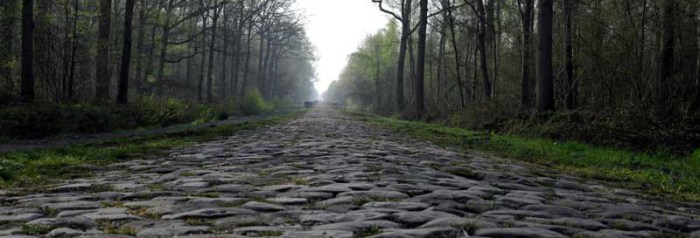
 
Arenberg
 
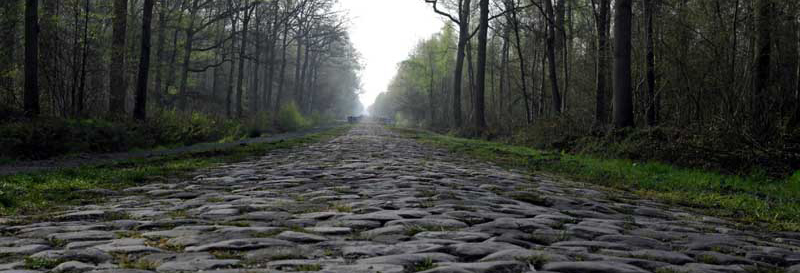
The weather held during the week between the Ronde and Roubaix, guaranteeing a dust-infused race rather than the often expected mud-fest. Boonen was back and, at one point, seemed about to repeat his memorable long range one man show of 2012. He faltered though – perhaps having spent too much time in the wind already in the knowledge that he lacked the race fitness to take it all the way. His OPQS teammates Stybar, Vanderberg and Terpstra looked also to have fluffed their lines as a large group, including Cancellara and the much faster sprinter John Degenkolb of Giant-Shimano approached the final cobbled secteurs. With Sky’s Geraint Thomas and Wiggins also in close attention it was always going to be peppered with attacks before the rush for the line and Terpstra was the one who made it stick. Looking distinctly non-aero with his mouth so far agape, desperately trying to find more air for his lungs, he time-trialled his way to the Velodrome and had enough of a gap at the end to savour his final lap. Cancellara lost out to Degenkolb in the sprint for second but podiumed to continue an impeccable record of finishing in the top 3 of the last 12 Monuments which he has made it to the finish in.
 
In Roubaix BMC had, as has become habitual, showed flashes of tenacity but come away empty-handed yet again. Their time finally came in the Dutch Amstel Gold Race. In a move that mirrored his entire season last year Philippe Gilbert sat anonymously in the pack for 95% of the race and then, just as he had in the dying moments of 2013, emerged with impeccable timing to ride the rest off his wheel on the upper half of the Cauberg. With Van Avermaet probing and prodding throughout the day and a sacrificial attack from Sammy Sanchez on the lower ramps of the Mur, which everyone with an ambition to win had to counter, for once BMC played their roles expertly and suddenly Ardennes Week took on a whole new complexion. In truth Gilbert’s counter-attack past those who has been duped into going too early was a magnificent end to an otherwise less than enthralling race but it set the critics alight with talk of the possibilities of a sequel.
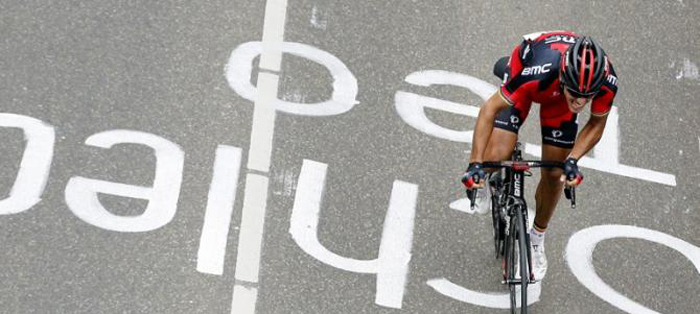
 
gilbert amstel
 
The early season talk of Cancellara, Sagan and Boonen halted overnight as they all re-focused on other goals and Gilbert was once more the talk of the town. Sky’s abysmal showing in AGR also stalled the talk of their excellent improvement at a single stroke, reducing the field of apparent contenders for the remainder of the Spring Classics to only Philippe Gilbert and and the Iberian all-rounders Rui Costa, Rodriguez and Valverde.
 
With the final two classics coming quick on the heels of Amstel, Flèche Wallone and Liege-Bastogne-Liege arrive like the swift crescendo of a bloody Shakespearean tragedy rather than the slow, measured denouement of a Pinter play. Gilbert had wielded his power once, could he strike twice more in quick succession and take the crown as 2014 King of the Classics? With no one rider having taken more than a single win this year the opportunity was certainly there..
 
But good theatre doesn’t always work well with such generous predictability. Great dramas sometimes need a point of low ebb and often it needs a villain to deliver it. For plenty of cycling watchers unrepentant doper Alejandro Valverde of Movistar would fit that bill perfectly. Taken in the context of the whole Classics season his unpopular win at Flèche-Wallonne makes for a great narrative – the dark ending to the middle Act allowing the possibility of a redemptive finale in Liege, but put simply Valverde displayed better timing than his rivals and showed greater experience to be in the right place to save energy until making his attack when the vicious Mur de Huy flattened a little in the final 150 metres. Riders who would have been deemed more ‘worthy’ winners came second and third – Dan Martin of Garmin and Michael Kwiatkowski – whilst Gilbert could only manage tenth and Sky bathed in even greater ignominy than at Amstel Gold by only finishing two riders – the best of those six minutes off the pace.
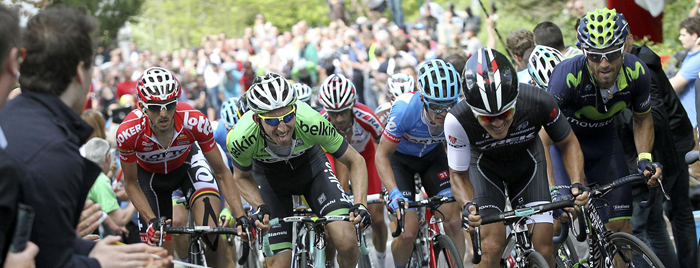
 
mur de huy
 
Valverde has had a very strong start to 2014 and his detractors might yet have to stomach more of him winning before the year is out. His early season wins in Murcia, Roma Maxima and his total dominance in Andalusia were apparently viewed with some degree of tolerance at least but winning a Classic seems to be the limit of acceptance. There were reports of him being booed on the podium. The suggestion followed that the notices following to a possible Monument win at Liege-Bastogne-Liege (which he has won twice before), Grand Tour GC or World Championship would be long, loud and much more vitriolic.
 
With plenty of the Grand Tour contenders taking part in a race more suited to them, the stage was well and truly set for the 100th edition of the oldest classic of them all, Liege-Bastogne-Liege,  La Doyenne. Chris Froome, Vincenzo Nibali and defending champion Dan Martin were all expected to be in the mix at the end of the 262km race that segues most neatly into the long stage races coming ahead. The release of an image of Froome’s paper-thin legs cross-crossed with bulging veins a couple of days before the race showed that he was following the method actor’s well-worn path to glory by shedding weight for a role.
 
Sadly a number of big marquee names either did not make the start or suffered during the race. Froome pulled out just before the sign-on, citing a mild chest infection, and was joined by team mate Peter Kennaugh who was suffering from an unrelated illness. Sky’s day was even more abject than at Amstel and Flèche with only first timer, Nathan Earle, making the finish, down in 70th place. World Champion Rui Costa and last year’s No.1 rider Joachim Roderiguez also pulled out during the race after getting caught in crashes. The litany of withdrawals were the main action in a long race that, like Flèche, only really got animated in the last couple of kilometres, by which time it was too late for Nibali to make a break and yet still too early for Gilbert to try to sting the other contenders. Dan Martin seemed to have made the right jump on the final climb but lost grip under his front wheel on the very last corner, coming down ignominiously to allow Valverde, Gerrans and Kwiatkowski around to contest the sprint finish. The Australian Orica-Greenedge rider held off the strong challenges from the Spaniard and the Polish national champion to take his second Monument win and prompt a wave of anti-Valverde gratefulness. It seems that it is just fine for Alejandro to take second places.
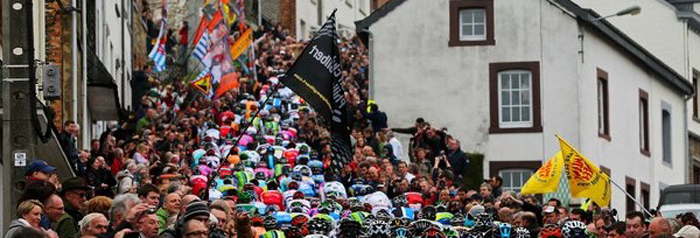
 
liege
 
And so the curtain fell and the season of madness ended. Looking back on the Spring Classics as a whole would appear to show a gradual decline in excitement and entertainment since the peak of E3 and Flanders; exposing the flaw of trying to look at them as a unified ‘Classics Season’. Despite outward appearances they are too different to be holistically viewed in this way and, without an ultra-dominant Merckx-like character vying for the win in every one, would almost always lack the crescendo that a normal ‘season’ of linked sporting events typically brings. The very strength of the one-day races – the ‘all or nothing’ requirement – inevitably leads to some days producing all the action and some days producing none. We are in a period of generally more cautious, controlled racing and the geography of Ardennes Week makes those races especially ripe for the well rehearsed late surge. It’s just a shame that no-one seemed to think that a secondary break, a moment of improv if you will, launched after the early breaks were caught, was worth a chance.
 
We shouldn’t leave the theatre despondent though. We have seen some fine interpretations of the old familiar stories. They are called Classics for a reason and, like Shakespeare, they will picked over and analysed, meddled with and modernised, but they will endure and they will delight for many, many years to come.



The Ups and Downs of the Round and Round – Track Life

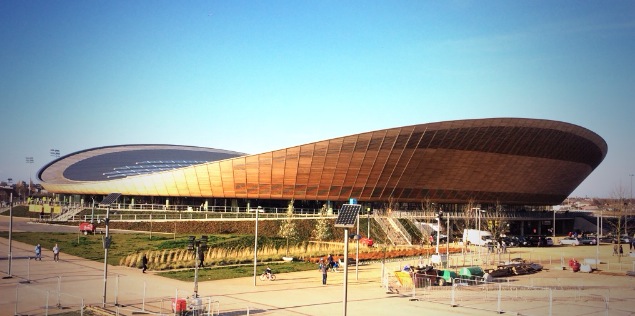
For most there was a carnival-like atmosphere accompanying the return of competitive cycling to the Olympic Velodrome last weekend. The sun shone unseasonably brightly on the crowds who made their way to the fifth and final round of the 2013-2014 Revolution Series and they were also treated to some magnificent racing in the superb building affectionately known as The Pringle.

But not everyone left the venue with that familiar rosy glow brought on by a combination of the sunshine outside and the artificially high heat inside. One person left the venue pale and shaken on a stretcher. Cycling is a tough sport and the heart-pumping thrills are often matched with heart-stopping spills.

Pringle

The Lee Valley VeloPark / The Pringle

Continue reading

Wheels of Steal – Pro-teams suffer spate of stolen equipment

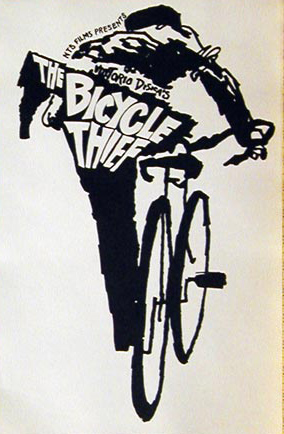
In what is becoming a regular feature of the early and late season races, pro-teams have again suffered a number of large scale equipment thefts in the past weeks. After Garmin’s high profile withdrawal of the Tour Mediterranean in February last year following the loss of 17 bikes from a team truck, 3 World Tour teams have lost significant amounts of bikes, wheels and other items this year. Garmin’s loss was estimated at €250,000 and was described as the work of ‘well-organised’ thieves. In a trend that will be causing huge concern to teams and suppliers this specific targeting of teams by seasoned criminals has continued in the recent weeks and months.

bicycle_thief

Garmin were by no means the only losers last year. Radioshack had 8 bikes stolen in Flanders and Europcar lost all theirs at the Euro Metropole Tour in October. Russian and Danish teams were also targeted separately at the World Champoinships in Florence losing more than 40 bikes between them. In each case team trucks were broken into. In the case of the Danish team many of the bikes were from the Junior squad who have to pay for the their own equipment.

Team Sky were latest to suffer with 16 bikes lost at the Tour du Haut Var last weekend. Once again professional thieves targeted a team truck during the night at a hotel. Unlike Garmin last year, Sky were able to source replacement bikes and make the start line . TheJerseyPocket spoke to  Team Sky mechanics and riders who were at the race to learn more.

Continue reading

The Sky is Not the Limit – the other British riders in the pro peloton

Team Sky (or Sky Procycling as they were until the start of this season) have undoubtedly changed the way that cycling is perceived in this country. Although they were set up from the start as an internationally rostered team – albeit with a very clear aim of initially achieving success in the Tour de France for a British rider – they were often described as a de facto British national road team. The overlapping managerial & coaching staff from the national track squad adds fuel to this conflation, especially for the legions of new cycling fans that the team’s success has turned onto the sport. It was also inevitable that many of the existing and upcoming British riders would find a home at Sky where the people, program and language were most familiar. But what of those British riders who choose not to ‘Take to the Sky’ with Brailsford and Co? Are they getting a fair share of cycle fan’s support when faced with the media-attention black hole that the Tour-winning team creates wherever it goes?

Continue reading

“Another Fine Mesh” – Pro-cycling clothing debate hots up

Cyclists are often a bit funny about their tan-lines. Cultivating a set of razor-sharp transitions, which switch instantly from the deepest mahogany to a blinding alabaster white, half way along a thigh or bicep is seen as one of the heights of being ‘pro’. Tan-lines like these tell of days in the saddle, not days on the beach. They are worn with more than just pride; for many they are a badge of honour.

Last week however, we saw a couple of cases of cases of pro team ‘tanning’ getting out of hand and raising questions about protection and performance.

Continue reading

Weekly Round Up – Tour Down Under & Tour De San Luis

It’s been a hard week to follow the start of the cycling season from the UK. Races in Australia and Argentina are not so easy to watch live; it either involves getting up at 4.30am and disturbing the rest of your non-cycling life with sleep deprivation to watch the Tour Down Under; or risking your eyesight squinting at a fuzzy web-cam whilst trying to follow fast-speaking Spanish commentary at the Tour de San Luis. But the very fact that there are these options speaks volumes about the proliferation of coverage. We’ve become so used to coverage of almost everything that this, in fact, makes for a pleasant (and nostalgic) change. Not so long ago watching short highlights programmes used to be the only option for even the biggest races and anything else would not even get that. Now live TV of entire stages of the bigger races plus legal (and illegal) streams and Youtube channels bring us even the most minor events in some form. Saturation levels are fast approaching

So it’s been refreshing this week to catch up the Tour Down Under in written and highlights form. I haven’t quite kicked the need for ‘live’ updates so have settled into a pattern of reading back my Twitter timeline after waking up to get the chronology of the race as it unfolds. By following a few teams and a few journalists you get the story of the whole race – early breaks and all – which highlight shows often skim over. Then, pre-armed with a bit of race knowledge, watching even a brief highlights package becomes more rewarding in the sense that you learn to watch the moves develop rather than witness the result and then try and work out how it came to be.

2014-tour-down-under-stage-20140121-040837-124

Continue reading

Three is a Magic Number – The Trials of a Balanced Outlook on Life

“Somewhere in the ancient mystic Trinity, you get Three as a magic number” – Bob Dorough, Schoolhouse Rock!

Trouble, they say, comes in threes. The way the back half of last year went personally I would have to add in a factor of at least 10 to that figure, but the notion of a Triad of Adversity seems to be a well held adage. Once a couple of things have gone awry, we almost expect a third calamity to happen and often actively seek it out in order to discount it as quickly as possible. It is an ingrained expectation of the way that things just are. When you think about it like that, it’s also a pretty depressing outlook to have.

So, in a wild stab at New Year’s, ‘on-the-other-hand’, optimism, perhaps we could ask what if the blighted triple was not only a truism but was governed by Newton’s Laws of Motion in the same way that rider’s movements are. In a world where all actions have an equal and opposite reaction, those same three troubles must be balanced by three happinesses. Each three clouds should have three silver linings. As with the third disaster that we yearn to seek out, surely it’s just a case of looking. I’m aware I’m clutching at some pretty thin straws here.

2133031_orig


Continue reading

In The Court of the King – An Evening with Sean Kelly

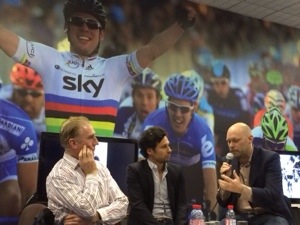
For a man who made a career of letting his legs rather than his mouth do the talking, An Evening with Sean Kelly at Cadence Performance in Crystal Palace this week could easily have been a painful experience for both speaker and audience. Kelly makes no secret of the fact that he is not a natural raconteur but he was most certainly a natural competitor and, just like in his racing, his force of character and professionalism ultimately outweighed any potential shortcomings in what was a very enjoyable and illuminating evening.

Kelly’s autobiography, “Hunger” (£18.99 Peloton Publishing) – short-listed for a number of sports writing awards – is an equal surprise coming from the quiet man of Carrick-On-Suir. Ghost-written by Lionel Birnie, the story of ‘King’ Kelly’s racing career was wrestled from the five times world No. 1 over a two year period, race by race, piece by piece, word by word. A long, hard road with many difficult, bumpy sections along the route. Fittingly for the two-time winner it was a veritable Paris-Roubaix of a task.

Birnie was alongside Kelly at Crystal Palace, adding context and anecdote to the Irishman’s recollections. Both were ably hosted by Daniel Friebe – author of ‘Merckx’,  ‘Mountain High’ and ‘Mountain Higher’ – who played the role of MC and posed the first 40 minutes of questions. Initially Kelly applied himself slowly to the task, as though lowering himself onto the infamous boil which cost him the 1987 Vuelta; testing the novel pain of speaking in front of 150 people instead of from the hidden confines of the Eurosport commentary box. Or maybe he was just subconsciously following the advice of the old patron Hinault, who often decreed that the first third of a stage would be carried out at a pace of his liking. Everyone held their breath and wondered how it would go.

20131128-213834.jpg

Birnie explains how he wrestled the story from Sean whilst he and Friebe look on. 

Continue reading

The Off Season (or What the Hell Do We Do Now?)

The absence of competitive road cycling from mid October has not really been a big issue for me in the past. As a kid and then as a teenager I only followed the Tour de France and never even considered the fact that cycling had a wider season which waxed and waned around it. The Tour was everything and everything was the Tour. It was like going on holiday – something that only happened in the Summer and would not even be on the radar in April or September.

A good few years ago, when I finally became aware of the Giro, the Vuelta and the Spring Classics I realised that the Tour was part of something bigger but even then I paid little attention to it in truth. The stars of the day were increasingly focussing on specific races so it was natural that I did too. I consumed my cycling through Channel 4 and ITV rather than through Cycling Weekly or Eurosport so options were pretty limited. From August to May I followed football. In June I watched a bit of cricket. I really didn’t know what I was missing.

Continue reading